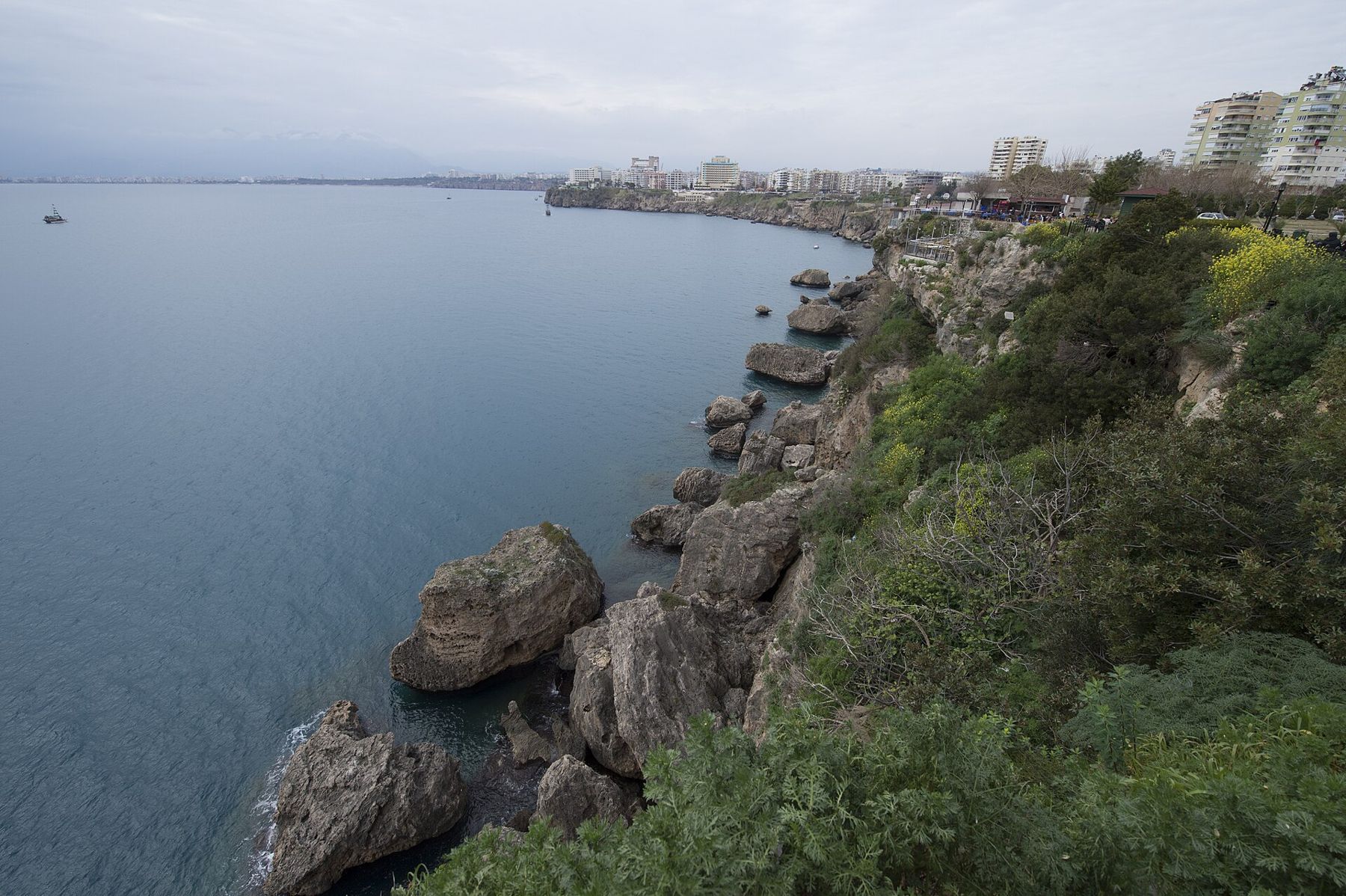
For many people the best weeks on the Antalya coast are not the hottest ones. In late spring and through the autumn, the beaches empty out, the air cools to something comfortable, and the sea, especially in autumn, still holds much of its summer warmth. You give up a little reliability and a few services, and you gain space, softer light and a slower pace.
This guide looks at the two shoulder seasons: roughly May into early June, and late September through October and into early November. Both have their own character, and they are not mirror images of each other.
Late spring: cool water, green hills
In May the coast is at its greenest. The hills behind the beaches are still covered in fresh growth, wildflowers line the cliff paths, and on clear days you can see snow on the high tops of the Beydağları from the beach at Konyaaltı. The air is warm, often properly hot by midday, and the beaches are quiet on weekdays.
The sea is the catch. It warms slowly after winter. In April it is typically roughly 17–19°C, and in May it usually climbs to around 20–22°C. That is fine for a brisk swim, and plenty of people swim through spring without a second thought, but it is a shock if you are expecting summer water. A short wetsuit makes longer swims much more pleasant at this time of year.
By the first half of June the water is typically around 24–26°C, and most visitors find it comfortable. Early June is often the sweet spot of the spring shoulder: warm sea, long days and beaches not yet at their fullest.
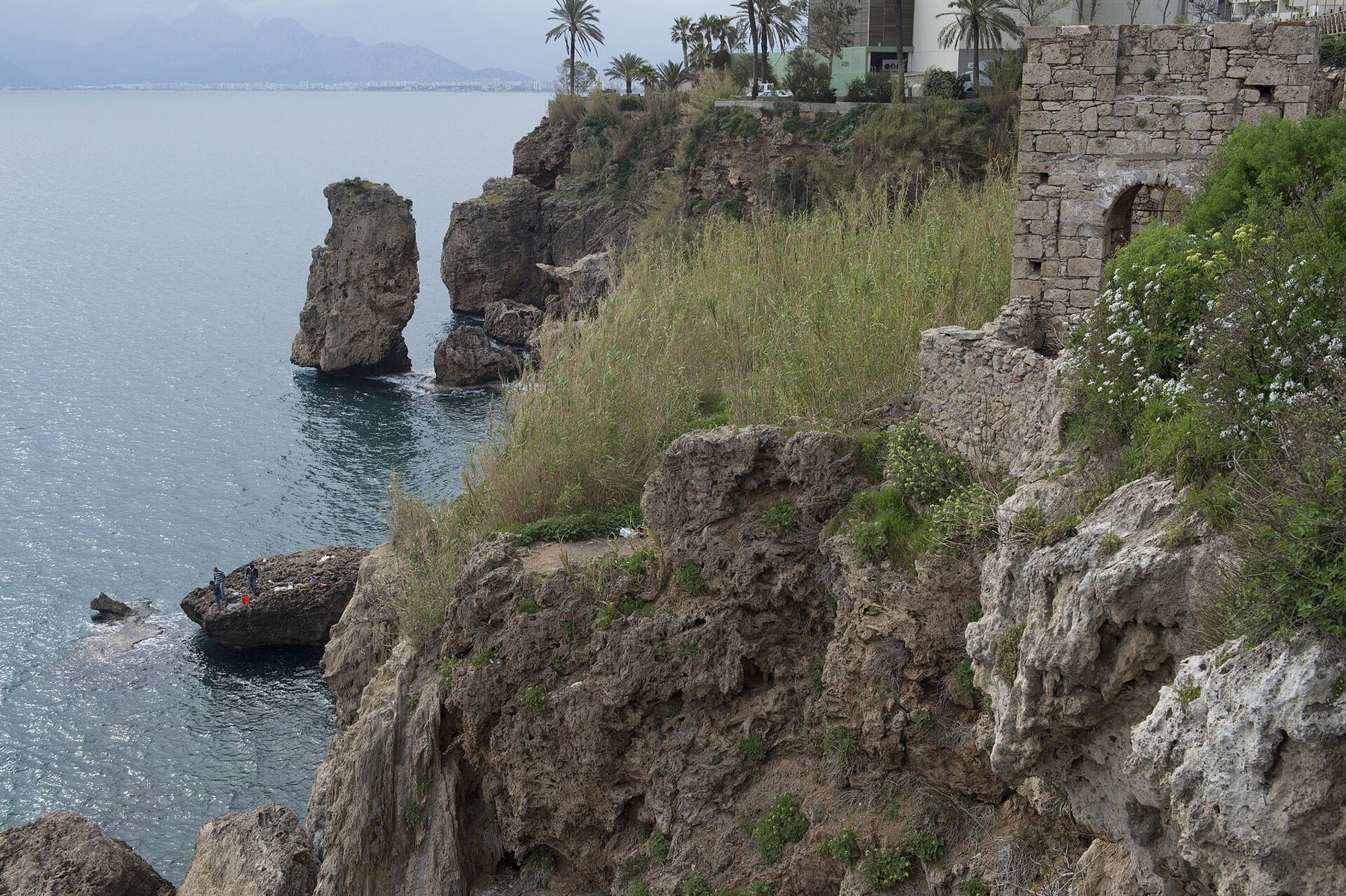
Autumn: warm sea, cooler air
Autumn turns the spring pattern around. The sea has spent all summer warming up, and it gives that heat back slowly. In September the water is typically still around 25–27°C, almost as warm as midsummer, while the air has lost its harshest edge. By October the sea is typically roughly 22–24°C, and on a sunny day it is still easy, comfortable swimming.
Into early November the sea usually stays around 20–22°C. On a still morning, with the air cooler than the water, you can step out of a sweater and into a sea that feels warm by comparison. The first autumn storms tend to arrive in October or November, bringing rain, rougher seas and a few grey days, but they often clear to long spells of calm, bright weather.
Autumn is also when the light is at its best. The sun sits lower, the haze of high summer thins, and the mountains across the bay at Antalya stand out sharply in the late afternoon.
Quieter shores
The biggest change outside high summer is the crowd. City beaches like Konyaaltı and the sand at Lara stay in use all year by local swimmers and walkers, but the dense rows of towels and umbrellas thin out sharply. On a weekday in October you may share a long stretch of pebbles with a handful of early swimmers.
Further along the coast the effect is even stronger. Village beaches such as Çıralı feel almost empty on some days, and the walk to the sand through the orchards is the only traffic. Turtle nesting and hatching overlap with the shoulder months on beaches like that one, so the night rules still apply when you visit.
Shorter days and colder corners
Daylight shrinks fast in autumn. By late October the sun is down by early evening, and the warmth leaves the air soon after. Plan swims for the middle of the day, when the sun is highest and the water at its most inviting, and keep a dry layer to put on as soon as you come out.
Some corners of the coast stay colder than others whatever the month. Where rivers and springs enter the sea, the water can be several degrees cooler than the open bay, and in spring, when the rivers run high with snowmelt, the difference is at its greatest. Shaded coves and rock platforms facing away from the afternoon sun also cool down quickly as the season turns.
What stays open, in general
Beach services follow the main season. Lifeguards, flags, lounger and umbrella rentals, showers and kiosks are concentrated in the summer months and thin out in spring and autumn. Exact dates vary by beach, by municipality and by year, so check locally rather than assuming anything is in place.
- City beaches usually keep at least some facilities, such as showers or toilets, for longer.
- Village and resort-area beaches may close their seasonal kiosks and rentals entirely.
- Minibus and boat services often run less frequently outside high summer.
- Many seasonal places to eat on smaller beaches close from late autumn.
- Protected beaches keep their own rules year-round; read the notices at the entrance.
The general rule is to bring what you need with you: water, food, shade if you want it and a towel. And with fewer lifeguards on duty, swim near other people, stay within easy reach of the shore and take extra care on windy days.
Picking your weeks
If warm water matters most, come in September or early October, when the sea still holds summer heat and the crowds have gone. If you prefer green hills, wildflowers and long days, late May and early June suit you better, as long as you accept a cooler sea. Either way, the shoulder season shows a calmer side of the coast, the one many people who live here prefer.