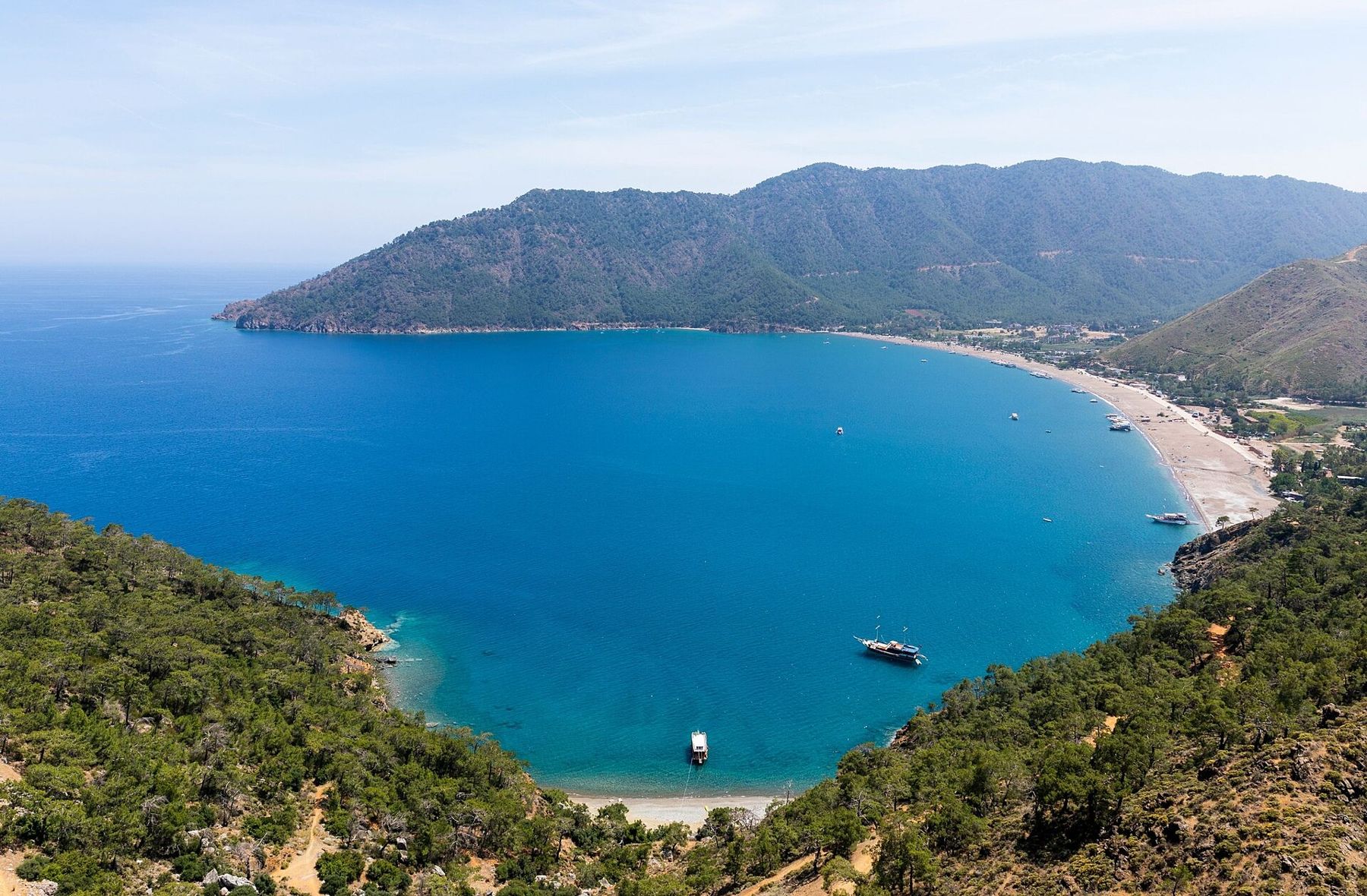
Adrasan is a bay that feels slower than the coast around it. Forested ridges wrap around a broad curve of water, the beach runs for a long way along its head, and in the morning the sea lies so flat that the boats moored offshore sit on their own reflections. There is a small village behind the beach, orchards and greenhouses on the flat land, and then the mountains.
People come here for that calm. The water is sheltered, the shore is easy to walk into, and the pace of the day is set by the sun and the boats rather than by any timetable. It sits at the southern end of the stretch of coast that runs from Çıralı around toward the cape, a little further from the main road than most beaches on this coast, and that extra distance keeps it quieter.
Where the bay lies
Adrasan lies in the Kumluca district of Antalya province, on the eastern side of the broad peninsula that ends at Cape Gelidonya. The bay faces east, and a high wooded headland closes its southern side. The land behind the beach is a small plain, with the village spread through it and the stream that drains the valley reaching the sea at one end of the beach.
Seen from the hills above, the bay is a near circle of deep blue, darker in the middle and pale turquoise along the shore, with the sand and pebble beach a thin bright line along its western edge. The forest comes almost to the waterline at both ends.
The village behind the beach is low and spread out, more farmland than resort, with lanes running between gardens and fields toward the hills. Evenings are quiet. The road along the back of the sand is the busiest part of the place, and even that slows down once the day boats have come back in.
The beach and the water
The beach is long and open, a mix of coarse sand and small pebbles. In front of the village it is mostly sand at the waterline, with pebbles higher up and at the ends. It shelves gently, which makes it one of the easier places on this part of the coast for children and less confident swimmers. You can wade out some way before the water reaches your shoulders.
The bay's shape protects it from much of the swell that reaches the more exposed beaches. Mornings are usually the calmest time, with clear water and almost no wind. In the afternoon a breeze often rises and ruffles the surface, but large waves are less common here than on open shores facing the south. When the wind does come in hard, the general advice in the guide to wind, waves and flags applies.
The stream at the end of the beach brings cooler fresh water into the bay. Near its mouth, especially in spring, the surface can feel noticeably colder, and after heavy rain the water there may be less clear. Further along the beach the sea is saltier and warmer.
Mornings are usually the calmest time, with clear water and almost no wind.
Boats, islands and the cape
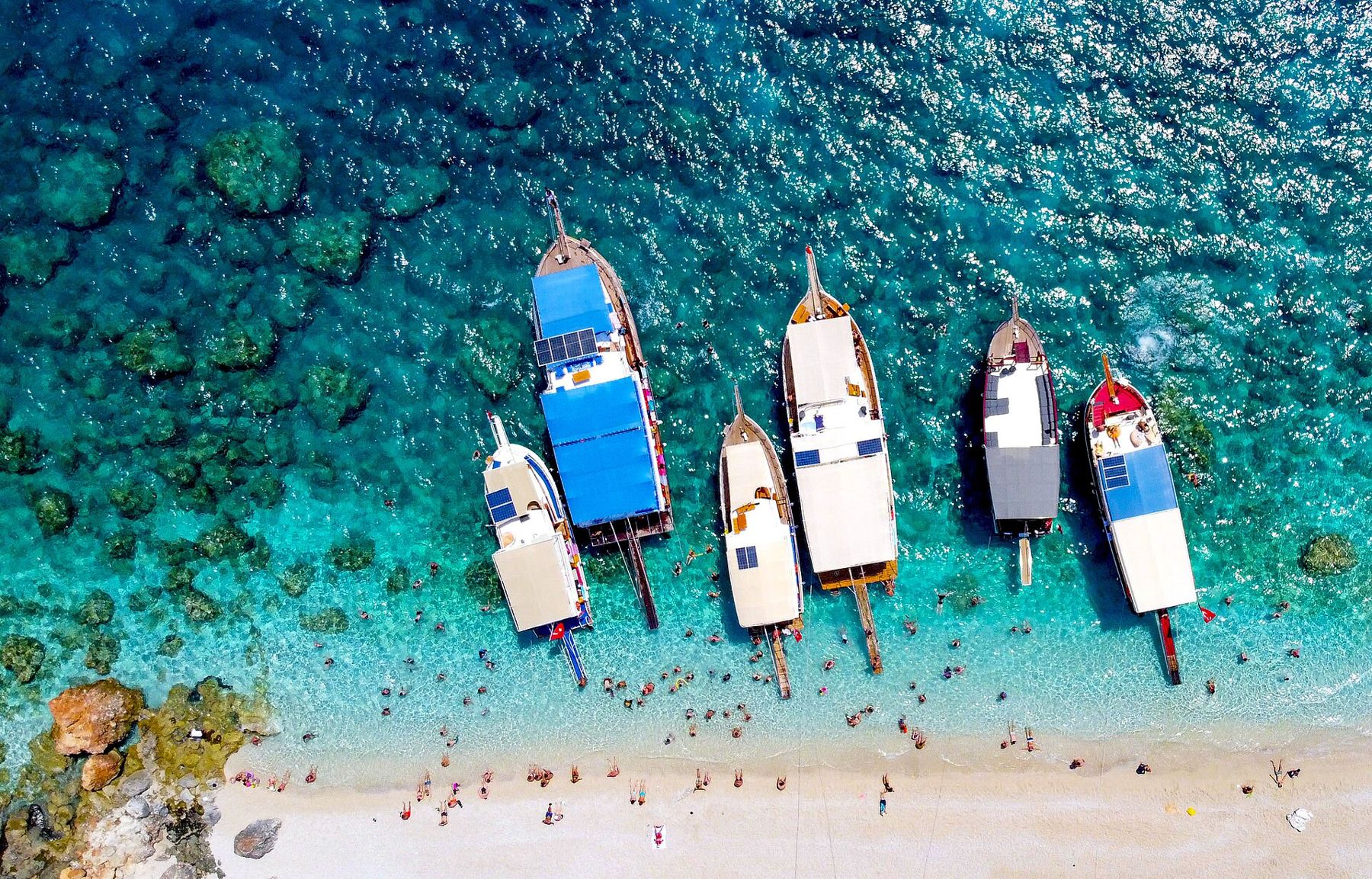
A row of wooden excursion boats moors in the bay through the season, and boat trips are part of life here. In general terms, the day trips head south and around the headland to quieter coves, swimming stops in clear water and the islands off the coast. The best known of these is Suluada, a rocky island whose name means watery island, with pale sand and shallow turquoise water reached only by boat.
Routes, prices, stops and departure times vary between operators and seasons, and some trips may not run in rough weather. Ask locally the day before, check what is included, and expect plenty of company at the most popular swimming stops in high summer.
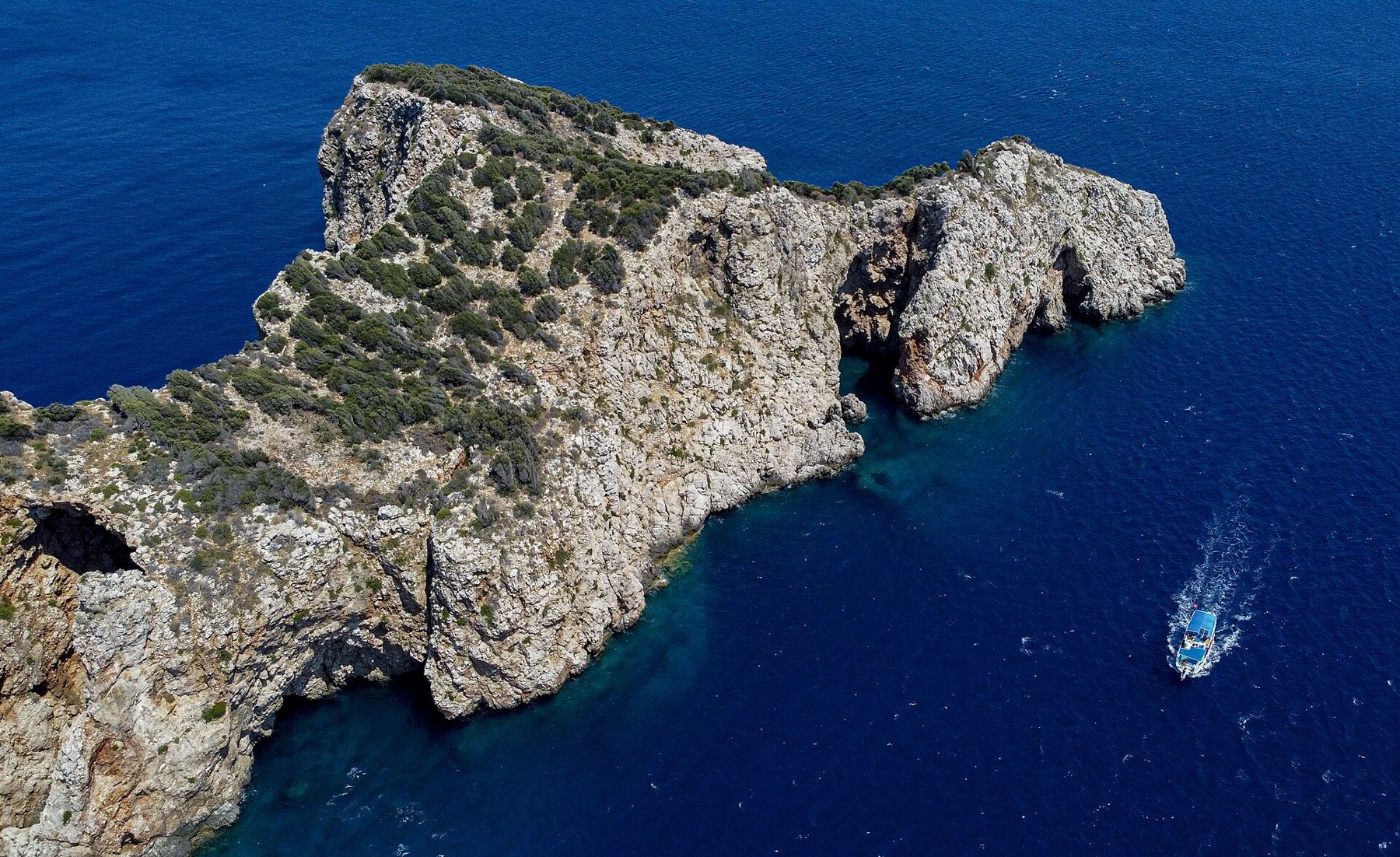
Beyond the islands, the peninsula ends at Cape Gelidonya, where a lighthouse stands on the cliffs above the open sea. A section of the long-distance Lycian Way walking route passes close to it. The path is rough, exposed and hot in summer, so it suits walkers with good shoes, plenty of water and an early start rather than a casual stroll from the beach.
Getting there and getting around
Adrasan is reached by road from the main coast road near Kumluca, with the last part running over the hills and down into the bay. By car it is roughly a couple of hours from Antalya, depending on traffic and stops. Minibus connections exist in general, often with a change in Kumluca; check current timetables locally, as services thin out outside the main season.
Once you are in the bay, everything is within walking distance. The beach road runs along the shore behind the sand, and you can walk from one end of the bay to the other in well under an hour. A car is useful if you want to explore the coast north toward Olympos and Çıralı, or the pine coves nearer Kemer.
Sea temperature and the season
Adrasan follows the general pattern of the Antalya coast. The sea is typically roughly 17–19°C in April, cool enough that a long swim needs some resolve. By June it has usually warmed to around 24–26°C, and in August it often sits at 27–29°C. September typically holds 25–27°C, and October still offers roughly 22–24°C, cooling as the month goes on. The shallow water along the sand can feel warmer on a still afternoon, and the stream mouth stays colder.
The shoulder months suit the bay well. In May and in late September the beach is quiet, the boats run a lighter schedule, and the forest on the slopes is fragrant in the morning heat. Some services close outside the main season, so check what is open; the guide to beaches in the shoulder season has more on what to expect. For the full year, see sea temperature month by month.
Practical notes
- Shade on the beach comes mainly from umbrellas and a few trees at the back; bring a hat.
- Water shoes help on the pebbles at the ends of the bay and on the rocks.
- Keep clear of the mooring area and the boat lanes when swimming.
- Lifeguards, showers and beach facilities vary along the shore; check locally.
- Any fees for sunbeds or boat trips change from season to season; check before you go.
The best way to use Adrasan is slowly. Swim early when the water is glassy, take a boat out once if you want to see the islands and the cape, and spend the hot afternoon in the shade. Come back to the water in the evening, when the light falls behind the ridges and the bay turns from turquoise to silver.
If you have only one day, an early swim and a slow walk the length of the beach show you most of the bay: the river end, the moorings, the pale sand in front of the village and the forest closing in at the southern tip.