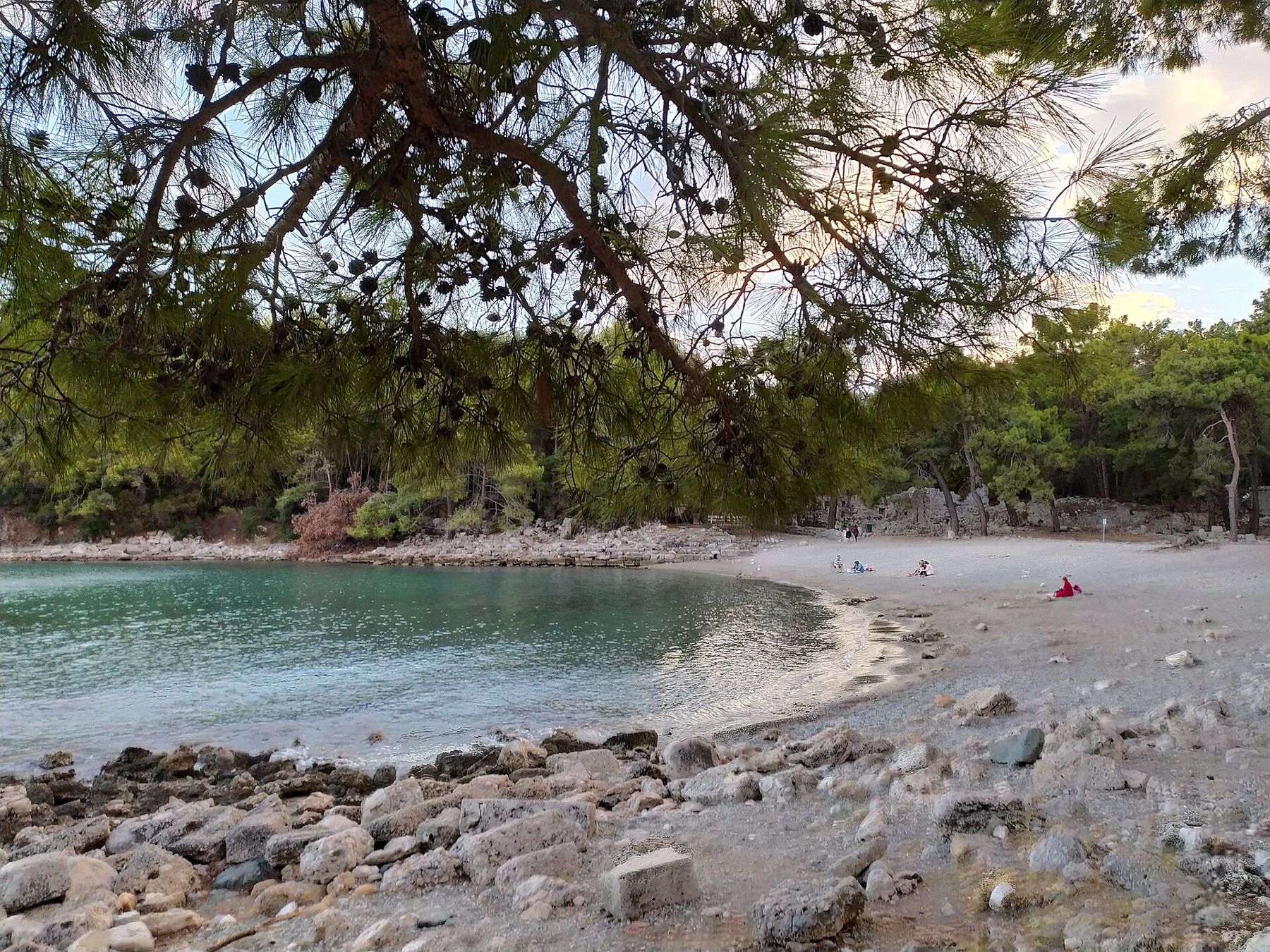
South of Kemer the coast changes character. The long pebble strands give way to a broken shore of headlands and small bays, and the pine forest comes right down to the water. Around Tekirova, and especially at Phaselis just to the north of it, you find the kind of swimming that the big resort beaches cannot offer: little coves with pale sand and pebble, shade under the trees, and shallow water that stays calm on most summer mornings.
These coves sit inside a national park, and the forest is the point. Come for slow swims, long picnics in the shade and the smell of warm pine, not for sunbed rows and music.
Where the coves are
Phaselis lies on a small peninsula off the main coast road between Kemer and Tekirova. The road in runs through pine forest to a ticketed entrance, and beyond it the peninsula has several small bays on different sides. The ruins of an ancient harbour town stand among the trees between them; a sister guide covers those, and here they are simply part of the view.
Tekirova itself has a longer beach to the south, a mix of pebble and sand backed by resort development, with open sea and the mountains rising behind. The Phaselis coves are the quieter, more sheltered choice, and the one this page is about.
Sand, pebble and shade
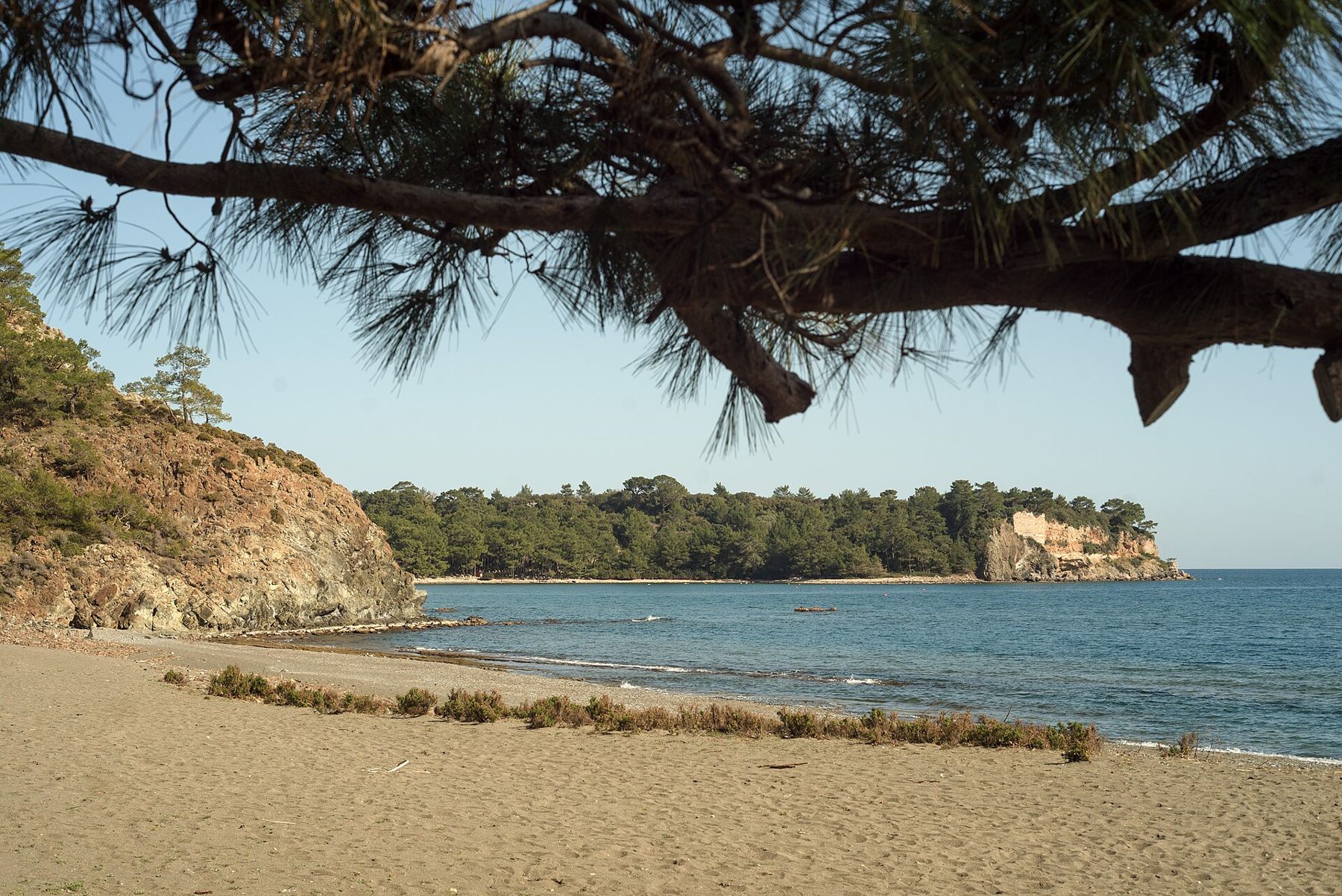
The coves are mixed shores: fine pale pebble and coarse sand at the waterline, larger stones and rock at the edges, and pine needles underfoot where the forest meets the beach. Several of the bays have trees growing almost to the water, and on a hot day the shade under them is the most valuable thing on the coast. Arrive early and you can choose your tree.
The water in the bays is often shallow near the shore and shelves gently, which is unusual on this part of the coast. That makes the coves well suited to children, cautious swimmers and anyone who likes to wade before committing. Toward the rocky ends the bottom becomes uneven, and sea urchins live on some of the rocks, so water shoes are worth having.
Swimming in the bays
On calm days the water is clear and bright, turquoise over sand and darker over weed and rock. Because the bays are sheltered by headlands, they often stay calmer than the open beaches when the afternoon breeze picks up. Snorkelling along the rocky sides shows small fish and the shapes of stones on the bottom.
There are usually no lifeguards. Boats sometimes anchor in or near the bays in season, especially excursion boats from Kemer, so swim where you can see and be seen, and keep clear of moorings and anchor lines.
The water warms on the same pattern as the rest of the coast: typically around 17–19°C in April, roughly 24–26°C in June, 27–29°C in August, 25–27°C in September and 22–24°C in October. The shallow bays can feel warmer than the open sea on still afternoons.
Entering a protected area
The coves at Phaselis lie within the Beydağları Coastal National Park, and the peninsula is a protected heritage site as well. That brings a few rules, described here only in general terms because the details change:
- There is an entrance fee to the site, collected at the gate; check current charges before you go.
- Opening hours follow the season, and the site closes in the evening.
- Fires and barbecues are not allowed in the forest; summer fire risk is serious.
- Take every scrap of rubbish out with you.
- Facilities are basic; bring your own water and food.
Respecting these rules is what keeps the coves as they are. The pines that make the place special are also what makes it vulnerable to fire.
Plan around the gate rather than the sun. Because the site opens and closes at set times, you cannot count on a sunrise or late-evening swim here the way you can on an open town beach. Arrive soon after opening for the calmest water and the most shade to choose from, and leave yourself enough time to walk back through the forest before closing. Pack light, since everything you carry in has to come out again on foot.
When to go
June and September are the sweet spots: the sea is warm, the forest is fragrant and the coves are not yet, or no longer, at their busiest. In July and August the bays can fill by midday, partly with visitors arriving by boat, so the first hours after opening are the time to have the water nearly to yourself. Spring brings green forest and cool water; autumn brings warm water and softer light. The guide to beaches in the shoulder season has more on swimming either side of summer.
Getting there and what else is near
The turn-off for Phaselis lies on the main coast road a short distance north of Tekirova, and buses and minibuses running between Kemer and the villages to the south pass close by. From the road, the way to the coves is a walk through the forest from the entrance, so allow time and bring a light bag rather than a heavy beach load.
From here the coast continues south toward the long turtle beach at Çıralı and the valley shore of Olympos at the river mouth. A day that starts with an early swim in a Phaselis cove and ends further down the coast takes in some of the finest shoreline between Antalya and the cape.