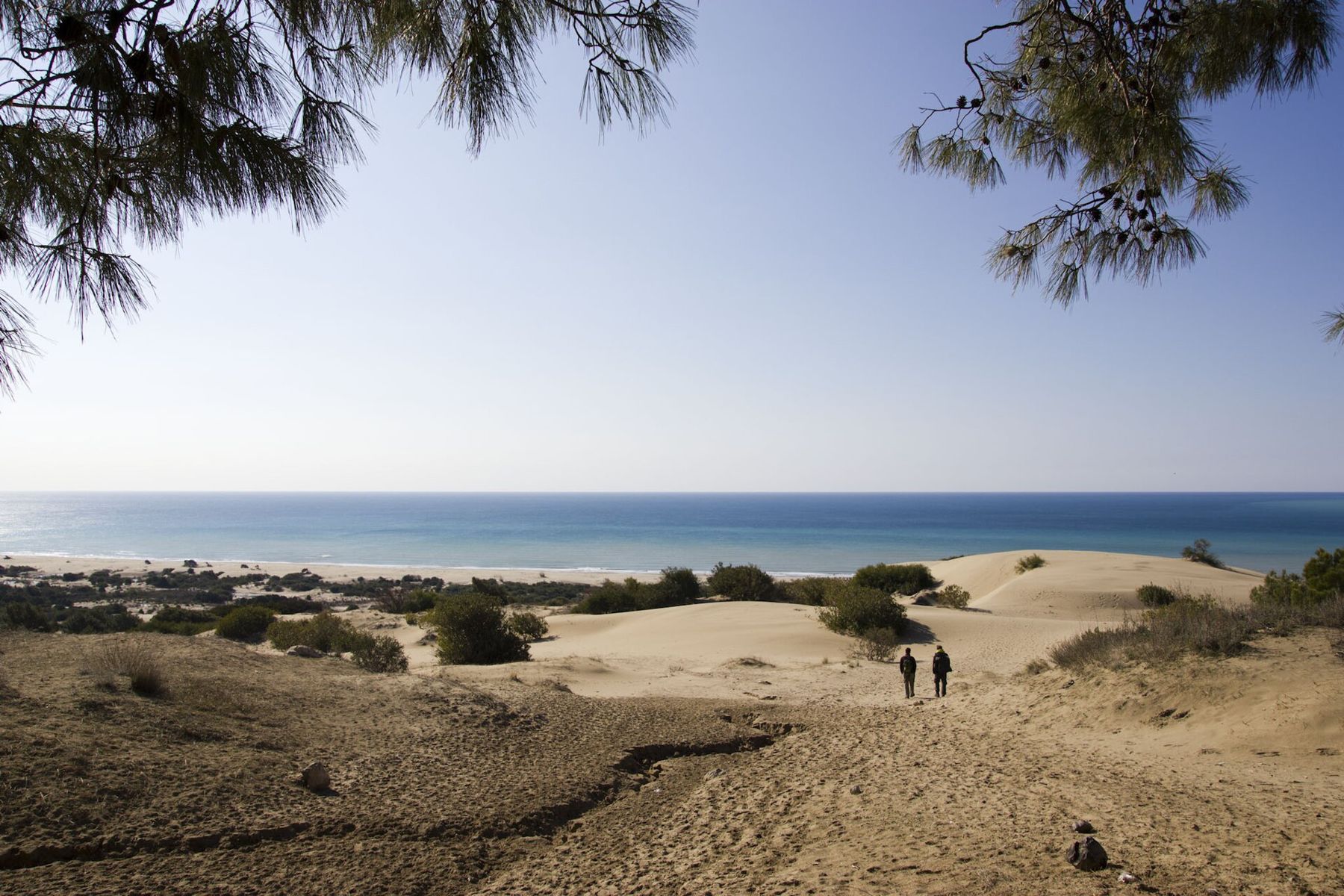
Patara is the opposite of the small coves along the rest of this coast. Instead of a sliver of sand between cliffs, there is a shore so long that its far end disappears into haze: eighteen kilometres or so of fine pale sand, open to the sea, backed by dunes, scrub and pine. You can walk for an hour along the waterline and still see the beach running on ahead of you.
It is also one of the most important nesting beaches for loggerhead turtles in the Mediterranean, and that shapes everything about how the beach works. The shore is protected, access is controlled, and at night the sand belongs to the turtles.
Where the long beach lies
Patara lies on the coast west of Kalkan, in the far southwest of Antalya province. The small village of Gelemiş sits a short way inland, among fields and low hills, and a road runs from the village to the main entrance to the beach. The ruins of ancient Patara lie beside that road, half buried in sand, a landmark on the way to the shore.
The beach runs northwest from the rocky hills at its southern end, past the dunes, toward the mouth of the Eşen river. Most visitors use only the stretch near the main entry, where facilities are concentrated. Walk a little way in either direction and the crowd thins quickly.
Dunes, sand and wind
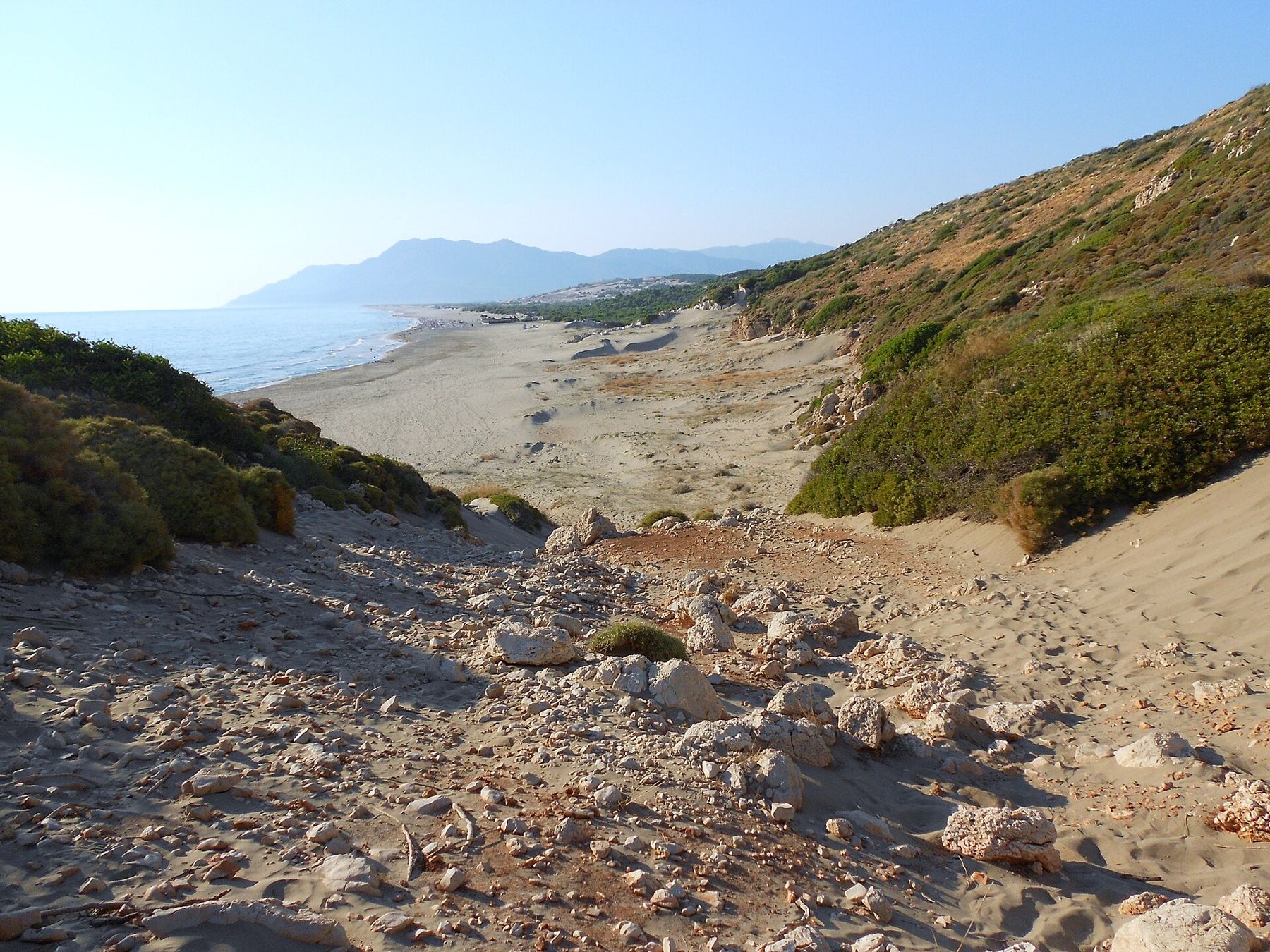
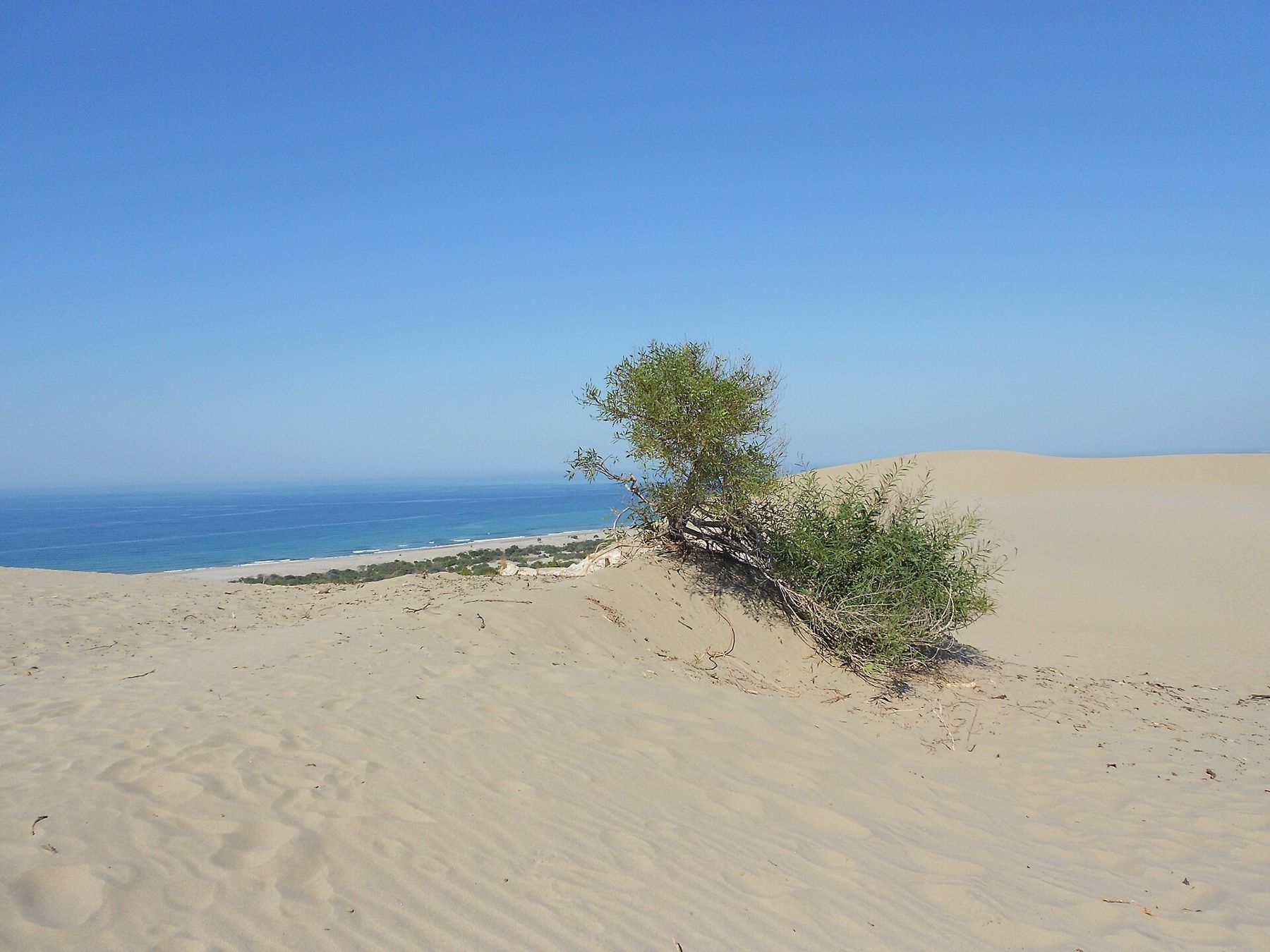
Behind the beach, the wind has piled the sand into dunes, some of them tall enough to climb for a view across the whole shore. They shift with the seasons, held in place here and there by scrub, low bushes and pine. Walking on them in the heat of the day is hard work, and the sand can be very hot underfoot; morning and evening are better.
The wind is part of Patara's character. Mornings are often calm, with a glassy sea and soft light over the dunes. In the afternoon, a steady breeze often rises off the sea, raising waves and blowing fine sand across the beach. On those afternoons, a spot near the dunes or behind your own windbreak where allowed is more comfortable than the open waterline.
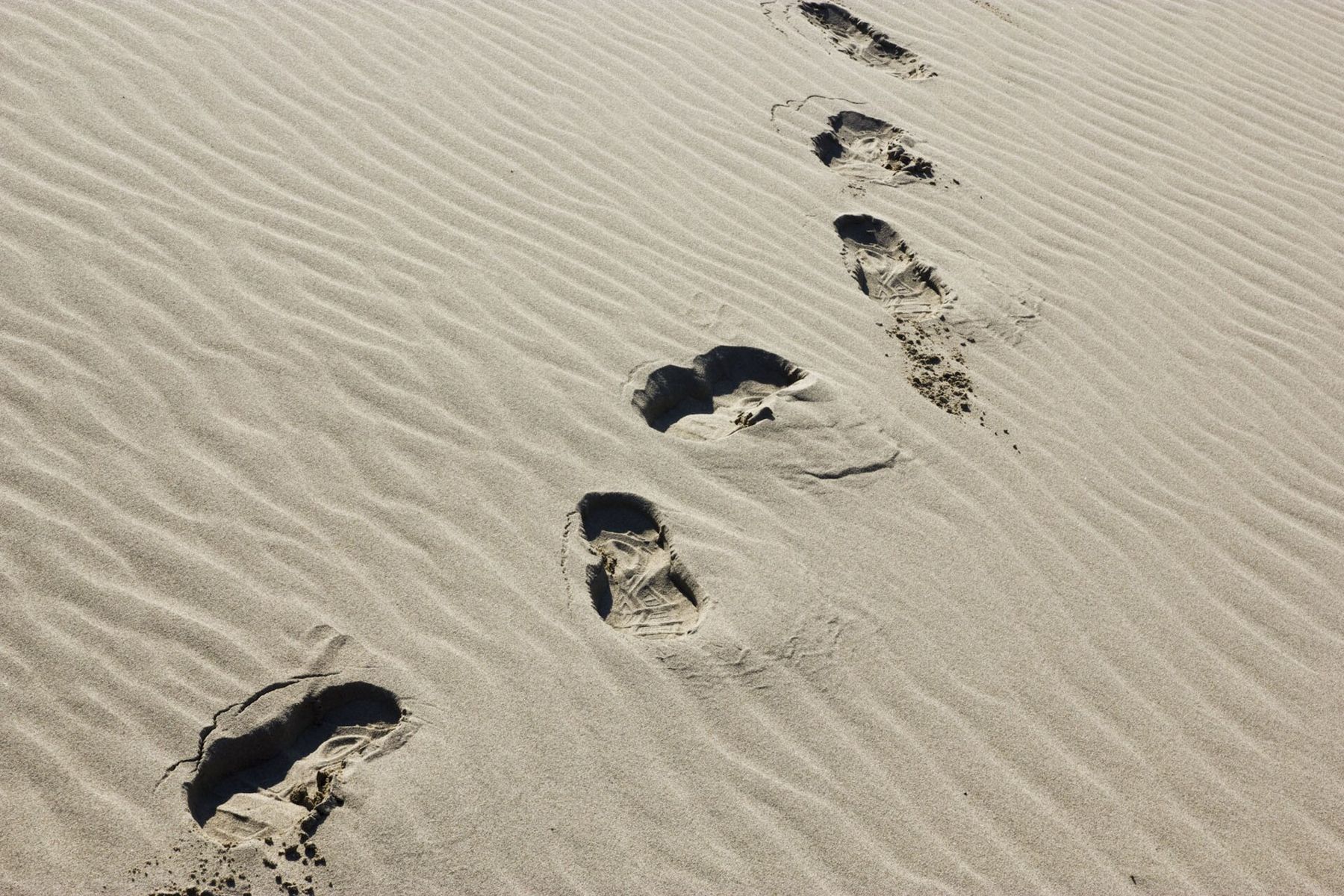
The sand itself is fine and pale, warm brown when wet and almost white where it dries in the sun. Walk far enough from the entry and the only marks on it are your own footprints, the ripples left by the wind and, in the nesting season, the tracks of turtles crossing from the sea to the dunes in the night.
Turtles and the night rules
Loggerhead turtles come ashore at Patara to lay their eggs in the sand, mostly from late spring through summer. The hatchlings emerge weeks later and make their way down to the sea, usually at night. For this reason the beach is part of a specially protected area, and the rules are stricter than on most beaches.
In general terms, the beach closes to visitors at night, and you are expected to leave by the evening closing time. Lights, fires and camping on the sand are not allowed. Marked nests must be left alone, and you should keep well clear of them. Umbrellas and sunbeds are kept to set zones near the main entry, and you should not push umbrella poles or dig into the sand elsewhere, where they can damage eggs. Signs at the entry and on the beach give the current rules, which can change; check locally.
The shore is protected, access is controlled, and at night the sand belongs to the turtles.
Getting in and getting around
The beach is reached through an entry point on the road from Gelemiş, and in general an entry charge applies, sometimes combined with the archaeological site. Opening hours follow the season and the protected-area rules, and the beach closes at night. Fees, hours and arrangements change, so check before you go.
By car, Patara is reached from the main coast road between Kalkan and Fethiye, with a turning toward Gelemiş. Minibuses connect the area with Kalkan and Kaş in general; check timetables locally, especially outside the main season. Many visitors combine a day here with the cove at Kaputaş or a stop in Kalkan on the same stretch of road.
Once you are on the sand, you get around on foot. The beach is long and soft, so walking any distance takes time and effort. Plan on staying close to the entry if you need facilities, and carry water if you head off along the shore.
Swimming at Patara
The sand shelves gently into the sea, so you can wade out a long way in calm conditions, and children can play at the water's edge. The water is usually clear, though wind and waves stir up the sand on rough afternoons.
The open position means waves are common, especially after midday. When the breeze is up, waves break along the whole shore and can create currents that pull along the beach or out to sea. Watch the water before you go in, follow any flags, and swim near the main entry, where help is closer. The guide to wind, waves and flags covers the usual warnings. Avoid swimming near the river mouth at the far end, where the water is colder and currents are less predictable.
Season and sea temperature
Patara follows the general pattern of the coast. The sea is typically roughly 17–19°C in April, warming to around 24–26°C in June. In August it often sits at 27–29°C, September typically holds 25–27°C, and October usually brings roughly 22–24°C. The shallow water along the shore warms quickly on still days, while the area near the river mouth stays cooler. For the year in one place, see sea temperature month by month.
- Shade is scarce beyond the set umbrella zones; bring a hat and cover.
- Carry water; the sand is wide and the walk back can be long.
- Leave before the evening closing time and use no lights on the beach.
- Facilities, lifeguards and fees vary by season; check before you go.
The best way to see Patara is early or late. Come in the morning for a calm swim and a walk on the dunes, retreat from the midday heat and wind, and return in the late afternoon, when the light turns gold on the sand and the long shore slowly empties before closing time.
Patara rewards a bit of effort. A short walk away from the entry, toward the dunes or along the waterline, is enough to find long stretches of open sand with only the sound of the waves and the wind for company.