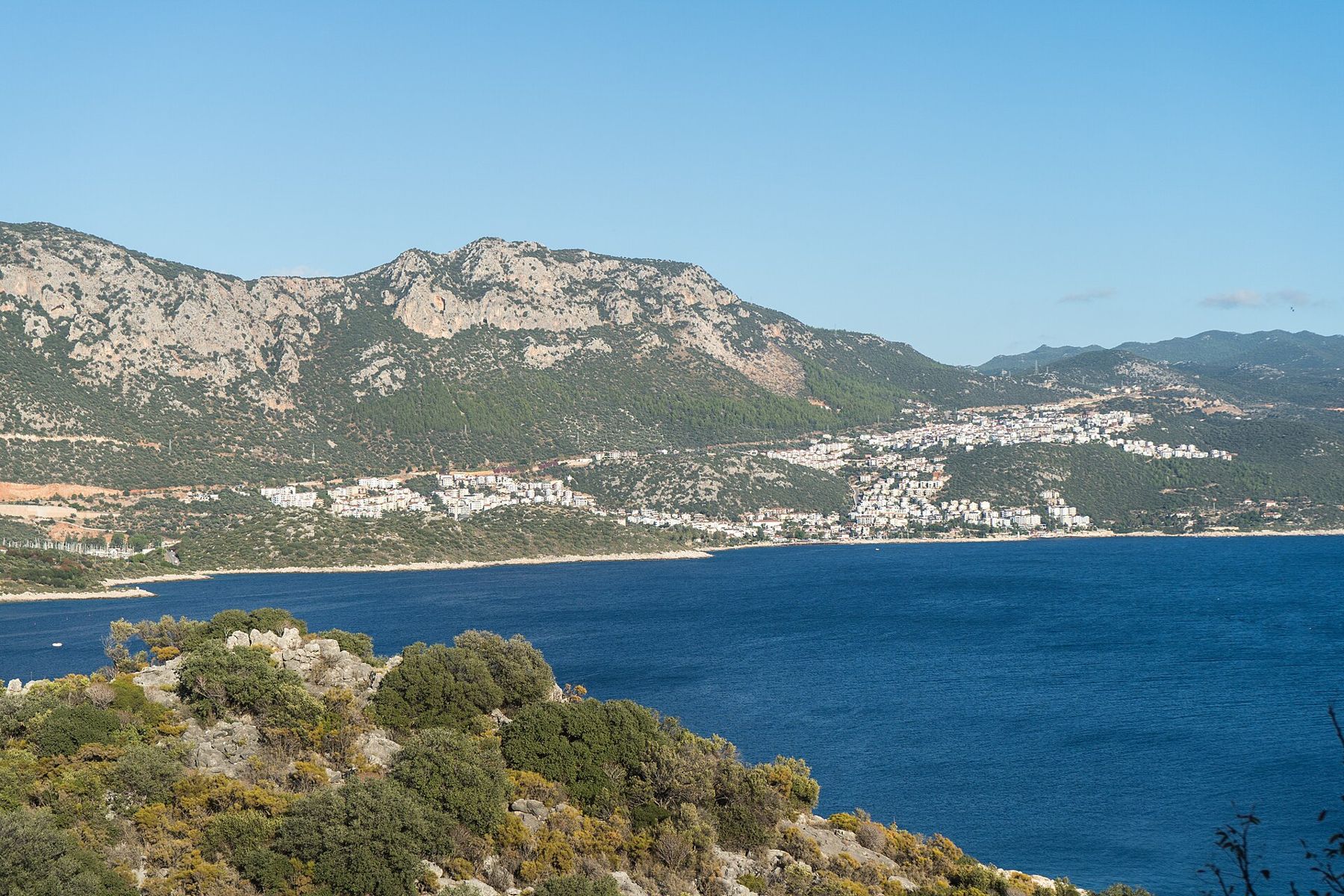
Kaş is not a long-beach town. The coast here is rock: pale limestone that drops straight into the sea, cut by small inlets and edged with platforms and ladders. Swimming in Kaş usually means stepping off a concrete or wooden deck, climbing down a ladder and floating in water so clear you can see the bottom many metres below.
That suits some people perfectly and others not at all. If you want to stand and wade, Kaş has only small pebble beaches. If you want deep, clear water close to town and the feeling of swimming straight into the open sea, it is one of the best places on this coast.
A town built on rock
Kaş sits on the far western part of the Antalya coast, between Kalkan and the coves further east. The old town climbs the hillside above a small harbour, and a long, narrow peninsula runs west from the town, its shore lined with rocks and swimming platforms. Across the water lies the Greek island of Meis, close enough to see houses on a clear day.
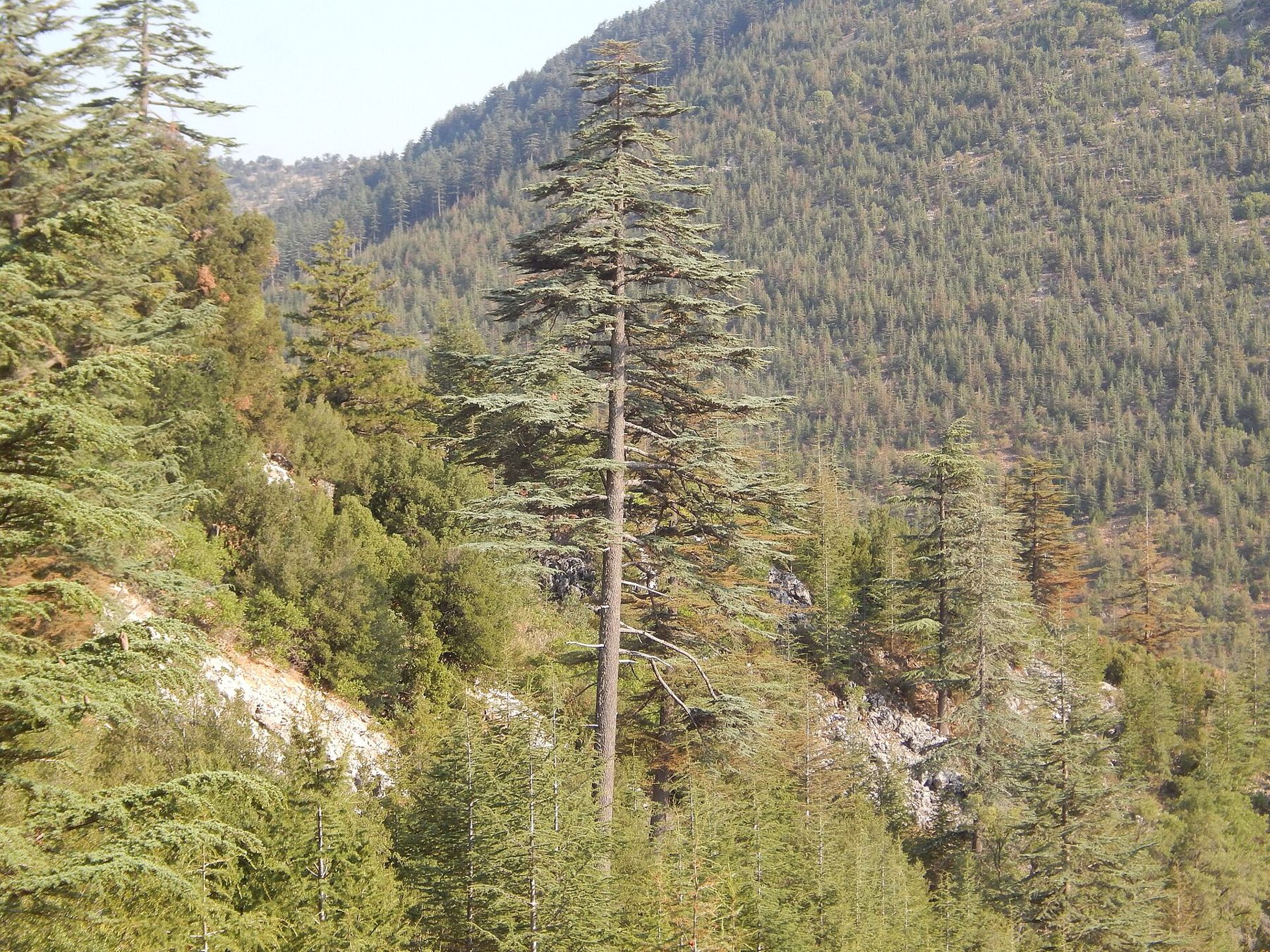
The ruins of an ancient theatre stand on the edge of town, looking out to sea, a landmark you will pass on the way to the peninsula. Beyond the town, the mountains rise steeply, cloaked in scrub, pine and, higher up, cedar and fir.
Platforms and ladders
Most of the swimming in and around Kaş happens from platforms built on the rocks. Some are public, some are run alongside businesses and may involve a charge or a minimum spend, and arrangements change from season to season; check before you go. Many have sunbeds, umbrellas and a ladder or steps into the water.
The ladders are the key. The rock edge is usually high and sharp, and the water is deep immediately, often over your head from the first rung. Climbing in and out by ladder is far safer than scrambling over rock, especially with a swell moving the water up and down. If you are not a confident swimmer, this is not the place to learn; the shallow sand at Patara is a better choice.
The peninsula
The peninsula west of the town is lined with platforms along its northern shore, facing the town and the harbour across the water, and along its southern shore, facing the open sea and Meis. The northern side is generally calmer, sheltered from the southern swell. The southern side has more open water and stronger light, and on windy days it can be rough.
A road runs around the peninsula, with walking possible but a fair distance from the town centre. Local minibuses and taxis serve it in general; check locally. Walking out early in the morning, before the heat, is a good way to see the shore and choose a spot.
Büyük Çakıl and Küçük Çakıl
Kaş does have two small pebble beaches, and their names tell you what they are made of. Küçük Çakıl, the small pebbles, is a narrow strip close to the town centre, with platforms around it and steps down to the water. It is convenient for a quick swim but can feel crowded in summer.
Büyük Çakıl, the big pebbles, lies a short distance east of the town and is a little larger, with clear water and a pebble shore that drops steeply. It is reached on foot along the coast road or by a short ride. Both beaches have coarse pebbles and steep entries, so water shoes are worth bringing. The guide to pebbles, sand and what to wear on your feet has more on that.
Clear water, cold patches and urchins
The water around Kaş is known for its clarity. With no large rivers nearby and a rocky bottom, the sea is often clear to a great depth, and the town is a well-known base for snorkelling and diving. Even with just a mask, you can watch fish over the rocks below the platforms.
The limestone around Kaş is full of channels where fresh water runs underground, and some of it seeps out into the sea. Swimmers sometimes notice sudden cold patches near the rocks, especially in spring. It is harmless but can be a shock on a warm day.
Sea urchins live on the rocks around the platforms and ladders. Stepping on one is painful, and the spines are hard to remove. Wear water shoes when climbing in and out, and look before you put your hand or foot on submerged rock.
Sea temperature through the year
Kaş follows the general pattern of the coast. The sea is typically roughly 17–19°C in April and around 24–26°C in June. In August it often sits at 27–29°C, September typically holds 25–27°C, and October usually brings roughly 22–24°C. The deep water off the rocks and the cold springs can make it feel cooler than a shallow sandy bay. For the year at a glance, see sea temperature month by month.
- Water shoes for urchins and sharp rock edges.
- A mask for the clear water below the platforms.
- Stay clear of boat lanes near the harbour and peninsula.
- Platform fees and facilities vary; check before you go.
The best rhythm in Kaş is an early swim off the rocks, when the water is flat and the platforms are still quiet, then the shade of the old town through the hottest hours. Go back down to the water in the late afternoon, when the sun drops toward Meis and the rock gives back the heat of the day. If the sea on the southern side is rough, cross to the sheltered shore of the peninsula, or take the short trip to one of the pebble beaches, where getting in is easier than from a ladder in a swell.