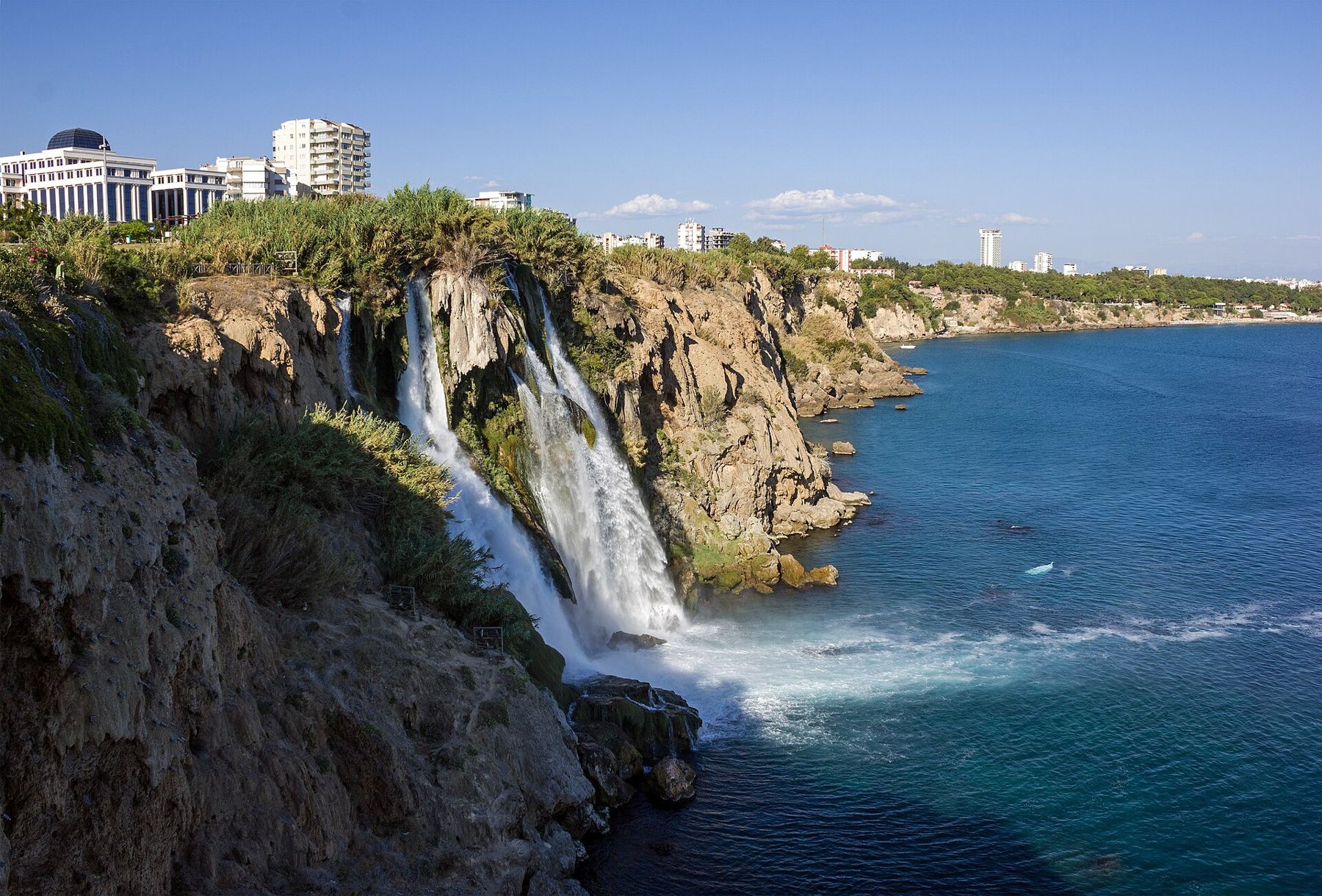
If Konyaaltı is Antalya's pebble shore, Lara is its sand. East of the city centre, the coast runs first along a line of low cliffs, then drops down to a long, flat beach of fine, pale sand that stretches away toward the east. The water is shallower here, the bottom softer underfoot, and the whole feel of the shore is gentler than the steep stones to the west.
Lara also has something no other beach in the city can match. Along the cliffs between the centre and the sand, the Düden river reaches the coast and falls straight off the edge of the land into the sea, a wide, roaring curtain of white water you can watch from the clifftop park above.
Where the sand begins
Leaving the city centre eastward, you follow a coast of cliffs topped by parks and apartment blocks. The rock is honey-coloured and pitted, dropping sheer into deep blue water. There is little beach along this stretch, only ledges and the odd ladder where locals climb down to swim.
Then the cliffs fall away and the sand begins. Lara beach runs for kilometres east from this point, a broad strip of soft sand backed by the city's eastern districts and, further along, by a long line of large resorts. Public beach sections sit near the western end, closest to the city, where you can arrive with a towel and use the shore freely. Further east, much of the frontage is taken up by resort beaches, though the shore itself remains a public place in principle. Which stretches have public access, facilities and lifeguards varies, so check locally.
The sand here is fine and warm, and it stays pleasant to walk on barefoot for much of the day, though by early afternoon in high summer it can burn. Shade is the thing to plan for. Bring your own, or look for the stretches where umbrellas are rented.
The Lower Düden falls
The Düden river rises in the limestone country north of the city, disappears underground and comes back to the surface before running down to the coast. At its end, near Lara, it reaches the top of the coastal cliffs and simply keeps going. The water pours over the edge in several broad falls and drops straight into the sea, throwing up a cloud of spray that drifts along the cliff face.
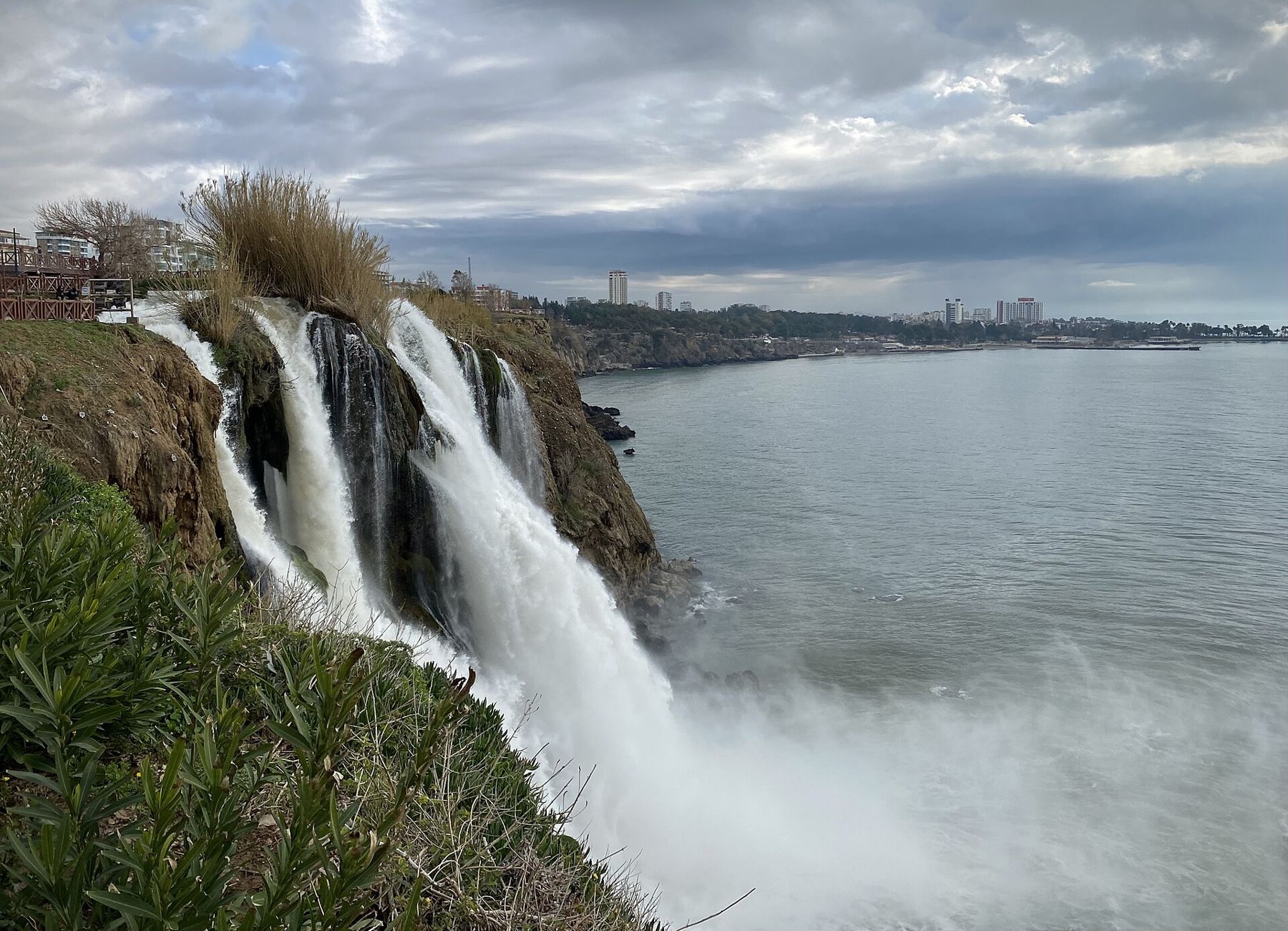
A park on the clifftop surrounds the falls, with paths, railings and viewpoints from which you look down onto the white water and along the coast toward the centre. It is a popular place in the evening, when the sun lights the spray, and in winter and spring, when the river runs high and the falls are at their loudest. On a grey day, with the sea calm and dark, the contrast of the white water is striking.
You cannot swim at the foot of the falls. The water there is churned, the rocks are steep, and the drop is far too high to approach from the land. Many boat trips from the old harbour sail along this coast and pause in front of the falls, which gives you the view from below. Operators and routes change, so ask at the harbour rather than booking in advance.
The water pours over the edge in several broad falls and drops straight into the sea, throwing up a cloud of spray that drifts along the cliff face.
The Upper Düden falls, inland
The same river makes a second, quite different waterfall further inland, on the northern side of the city. The Upper Düden falls sit in a shaded park among plane trees, where the river drops over a curved ledge into a pool. Paths lead down to a passage behind the curtain of water, and the air there is cool and damp even in high summer.
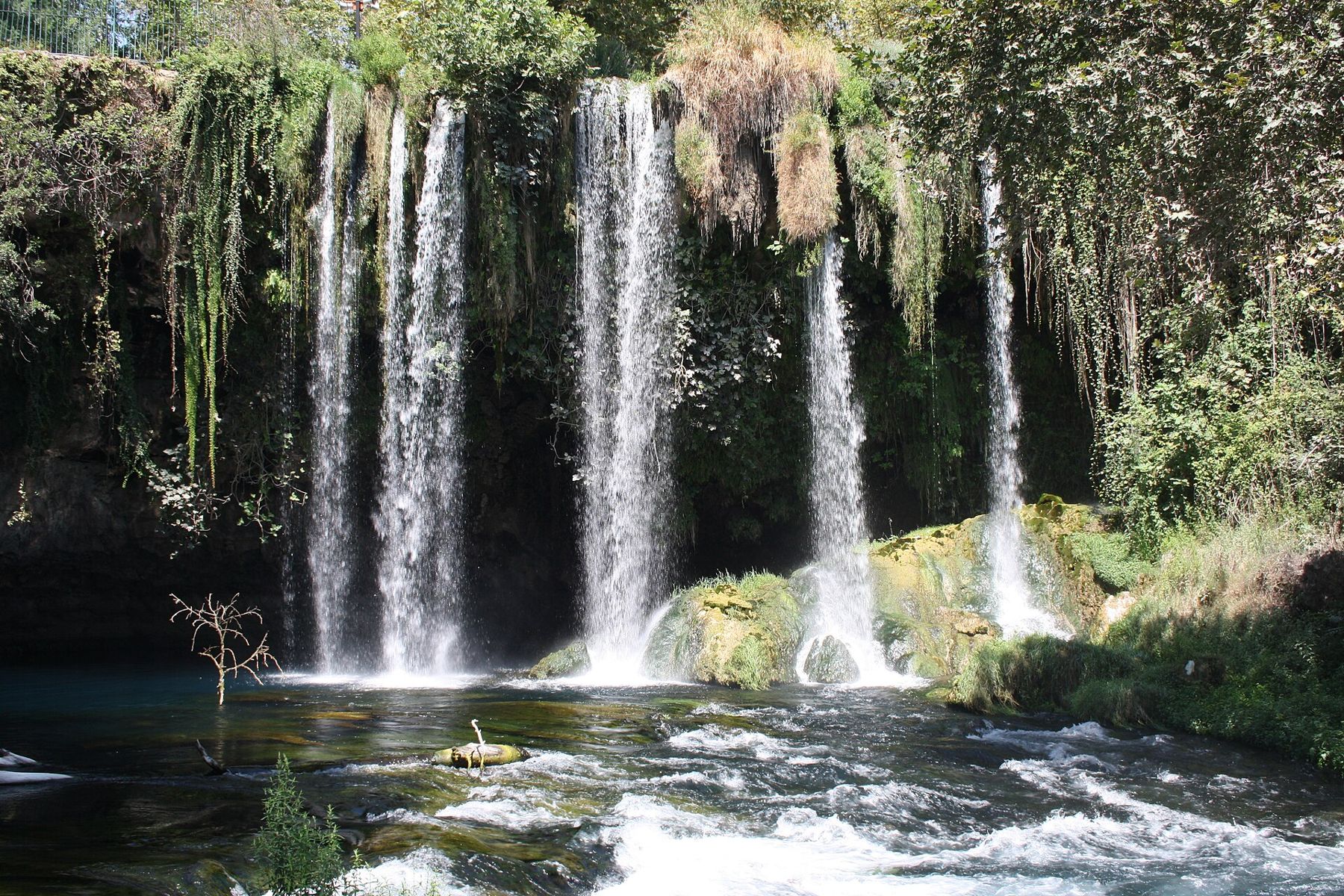
It is not a beach, and it is not on the coast, but it pairs well with a day at Lara. Mornings at the inland falls and afternoons on the sand make a good balance on a hot day. The upper park is reached by road or city bus; check routes before you go.
Swimming at Lara
The great difference from Konyaaltı is the slope. At Lara the sand runs out gently under the water, so you can wade a long way before you need to swim. That makes it a good beach for children and for anyone who prefers to ease into the sea rather than plunge in. The water is often a paler, milkier turquoise than on the pebble shore, because the sandy bottom reflects the light.
Shallow does not always mean calm. On windy afternoons, waves roll in across the shallows, and sandbars can form and shift. Children playing on a bar can find deeper water between them and the shore. Follow the flags, use the lifeguarded sections where they exist, and keep an eye on the youngest swimmers.
Sea temperatures here follow the coast's usual pattern. The water is typically roughly 17–19°C in March and April, rising to around 24–26°C in June and roughly 27–29°C in August. September keeps much of that warmth at around 25–27°C, and October is typically roughly 22–24°C. Shallow water near the shore can feel a degree or two warmer than the open sea on a still summer day. The full year is laid out in the guide to sea temperature month by month.
Getting there and planning the day
Lara lies east of the city centre, a short ride by city bus or taxi. Buses run out along the coast road toward the eastern districts; check current routes and stops locally, as they change. The Lower Düden falls park sits on the way, so it is easy to combine the falls and a swim on the same outing.
- Bring shade: the open sand has little natural cover.
- Sandals or light shoes help when the sand heats up after midday.
- Go early or late in high summer, when the light is softer and the sand cooler.
- Visit the falls in the late afternoon for the best light on the spray.
- Check which stretches are public and lifeguarded before you settle in.
- Carry more drinking water than you expect to need; the reflected heat off the sand is strong.
For a quieter season, when the sand is warm but not scorching and the water still holds its summer heat, see the guide to beaches in the shoulder season. And for a complete change of shore, with pebbles, a steep shelf and the mountains in front of you, head back west across the city to Konyaaltı.