Ask people what they remember about the beaches of this coast, and many will mention the stones before the water. The long shore at Konyaaltı crunches underfoot. The coves near Kaş are rock and ladder. Lara and Patara are soft sand that burns by noon. Each kind of shore changes how you get into the sea, how far you can wade, what you carry and what you wear on your feet.
This page sorts the coast by what is underfoot, and gives the practical side: shoes, urchins, shade and the hours of strongest sun.
Pebble shores
Pebble beaches are the most common type between Antalya and Kaş. The long beach at Konyaaltı, west of the city, the town beach at Kemer and the bay at Çıralı are all mostly pebble, from fine gravel to stones the size of your palm. They have real advantages. Pebbles do not cloud the water, so the sea stays clear even when there is a small wave running. They do not stick to you or your bag. And they drain quickly, so the beach dries soon after a storm.
The trade-off is the slope. Pebble beaches often shelve steeply, so you go from ankle-deep to out of your depth in a few steps. That suits confident swimmers but needs closer watching with small children. Waves on a steep pebble shore also break right at the edge, and the backwash can pull the stones from under your feet as you try to get out. Go in and out between waves, and do not stand at the waterline on a rough day.
Pebbles get hot. By early afternoon in summer, the dark stones at the top of the beach can be too hot to walk on barefoot. Sandals for the walk down and water shoes for the edge solve both problems.
Sand shores
Sand is rarer on this coast and found mostly on the wide, open bays. The beaches at Lara, east of the city, and the great sweep of Patara near Kalkan are the best known. Sand beaches usually shelve gently, so you can wade a long way out, which makes them the easier choice for families and anyone unsure in deep water.
Sand has its own habits. It holds heat, so the dry sand above the waterline can burn bare feet by midday. On windy afternoons it blows, stinging legs and finding its way into everything. And waves on a sandy shore lift fine sand into the water, so the sea can look cloudier than off pebbles on the same day. Some sand beaches are also turtle nesting sites, where rules about umbrellas, lights and night access apply; follow any posted signs.
Rock platforms and ladders
In some places there is no beach at all. Around Kaş and Kalkan, and below the old town walls in Antalya, much of the swimming is from flat rock shelves, concrete platforms and ladders fixed to the rocks. The guide to swimming off the rocks in Kaş covers this in detail.
Rock swimming means deep water straight away and some of the clearest sea on the coast. It also means sharp limestone edges, slippery weed near the waterline and, often, sea urchins. Water shoes with firm soles help most here. Use the ladders where they exist rather than climbing out over the rocks, and check the depth before jumping.
Sea urchins
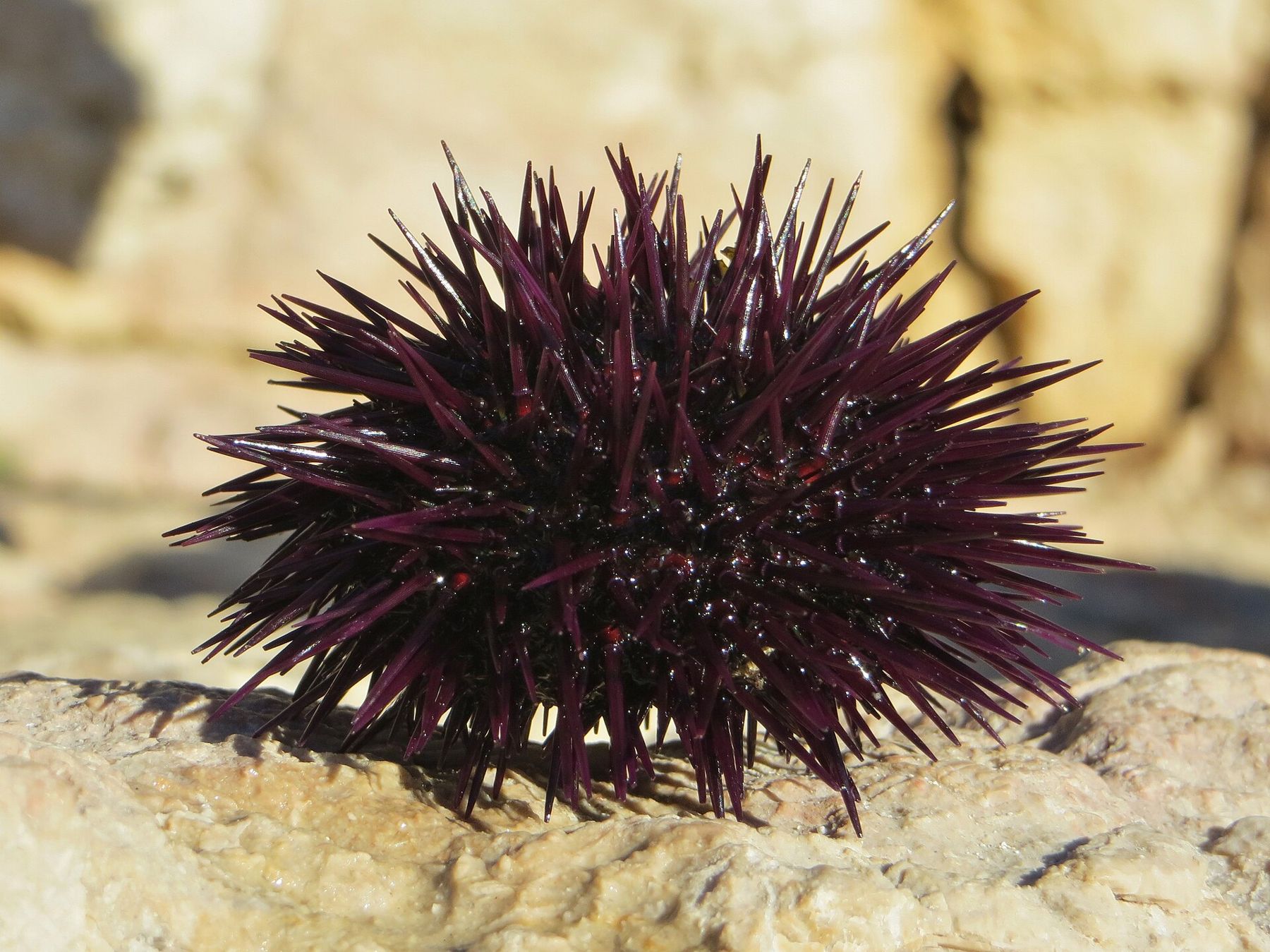
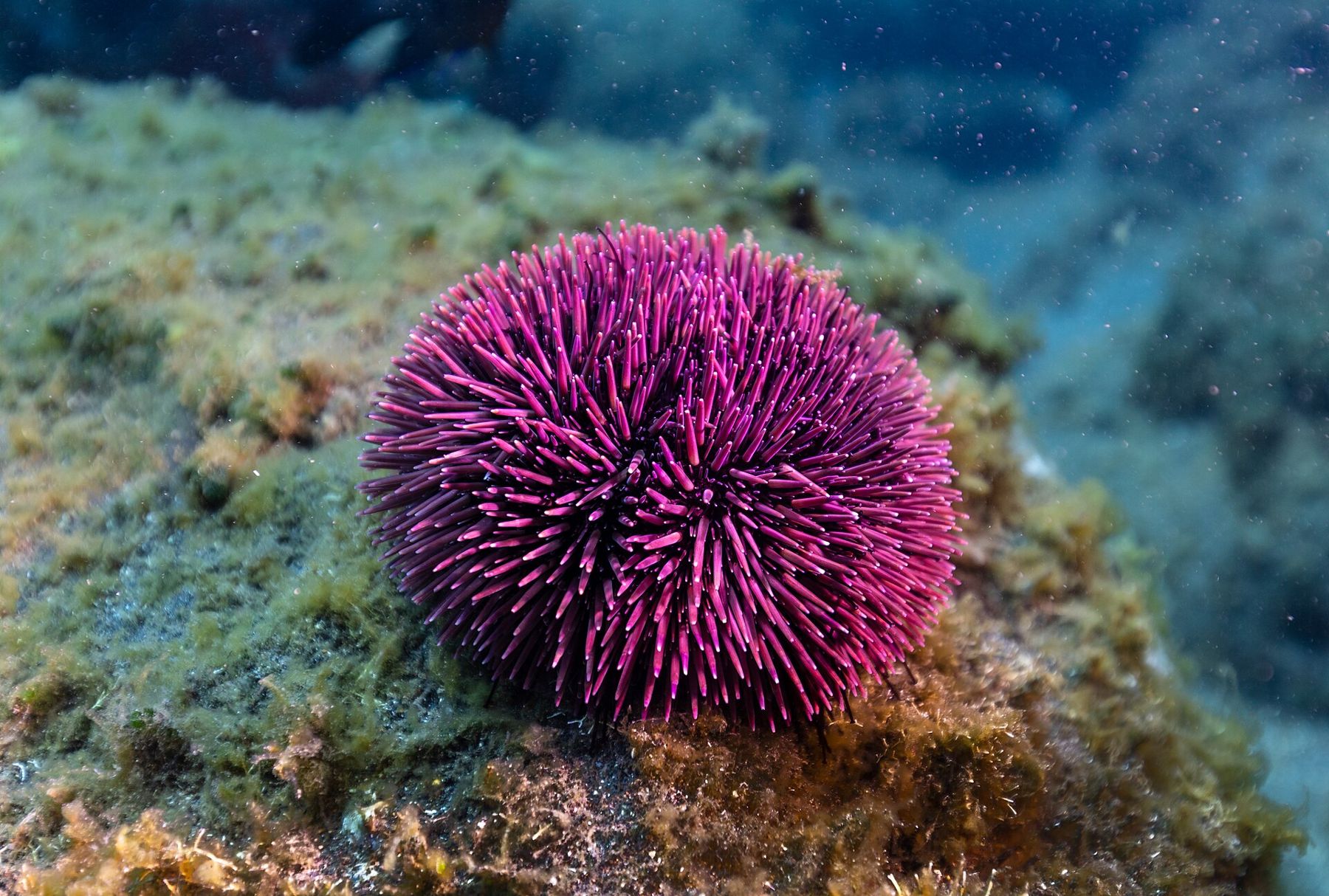
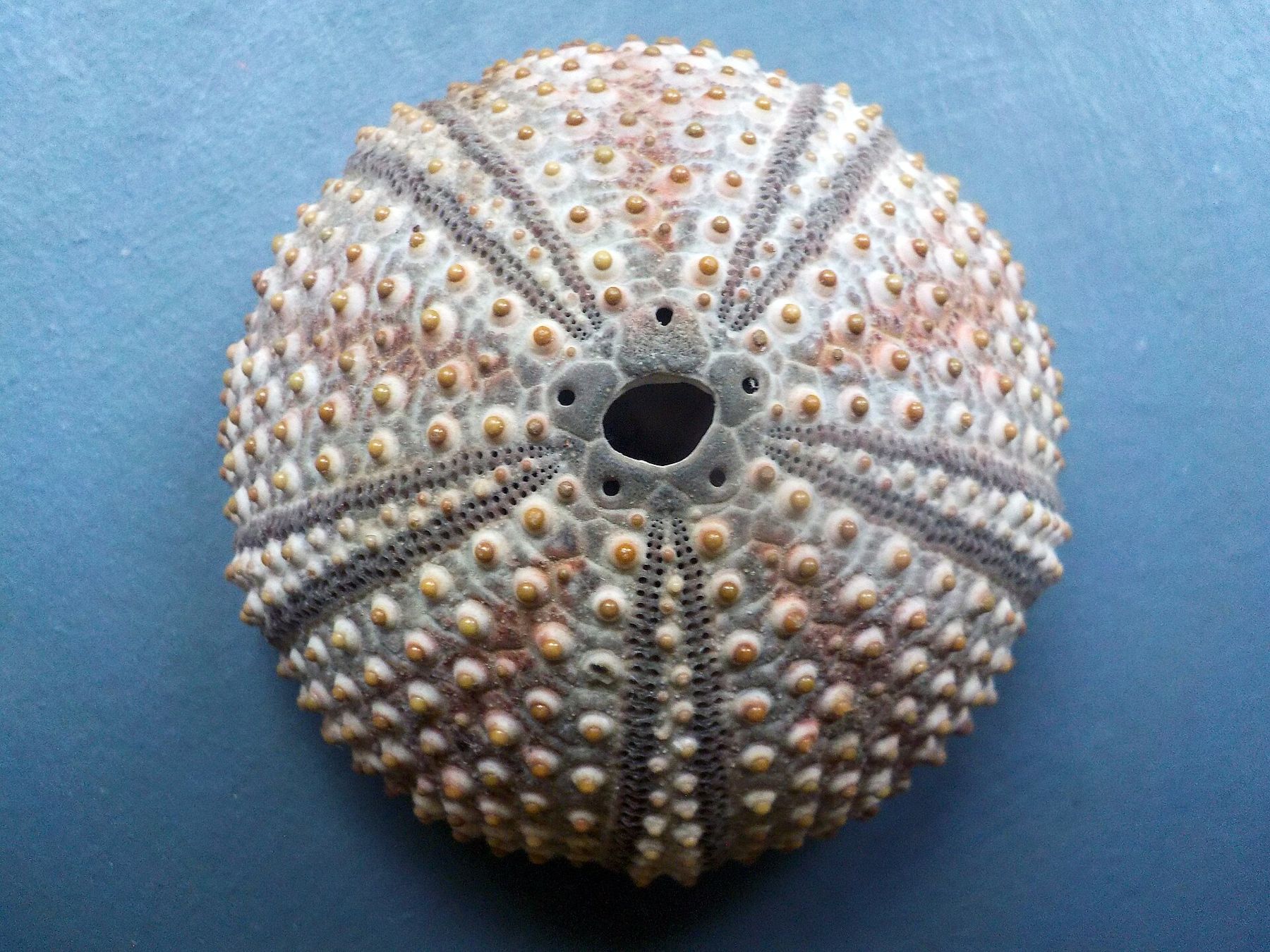
The most common reason people limp off a Mediterranean beach is a sea urchin. These small, round animals covered in spines live on rocks in shallow water, usually from just below the surface down to a few metres. On this coast they are common on rocky ends of beaches, on boulders, on platforms and on harbour walls. They are rarely found on clean sand or loose, moving pebbles.
They are not aggressive and they do not move toward you. The trouble comes from stepping on one or putting a hand on a rock to steady yourself. The spines are brittle and can break off in the skin.
- Wear water shoes on any rocky shore, and look before you put a hand down.
- Swim rather than wade over rocky ground.
- Small dark dots on rocks just below the surface are often urchins.
- If you step on one, remove any spines you can reach cleanly and keep the area clean.
- For spines that are deep, many, or near a joint, or for any sign of infection, see a pharmacist or doctor.
What to wear on your feet
Water shoes are the single most useful thing to bring to this coast. A simple pair with a firm sole and a snug fit works on pebbles, rock and hot sand, and lets you walk in and out of the sea without picking your way. Choose ones that drain quickly and stay on when you swim. Plain sandals are fine for the walk to the beach, but they slip off in the water and give little protection on sharp rock.
If you prefer to swim barefoot, choose sandy beaches and keep to the middle of pebble beaches, away from the rocky ends where urchins live.
Shade and sun hours
Natural shade is scarce on most open beaches. Pine coves such as the pine coves at Tekirova are the exception; elsewhere shade means an umbrella, rented or your own. Where umbrellas are allowed, a simple one makes a long day bearable. Rules and charges for sunbeds and umbrellas vary from beach to beach, so check locally.
From late spring to early autumn the sun is strongest from late morning to mid-afternoon. Swim early and late, spend those middle hours in shade, drink more water than you think you need, and reapply sun cream after swimming. The sea breeze makes the heat feel milder than it is, which is exactly when people burn.