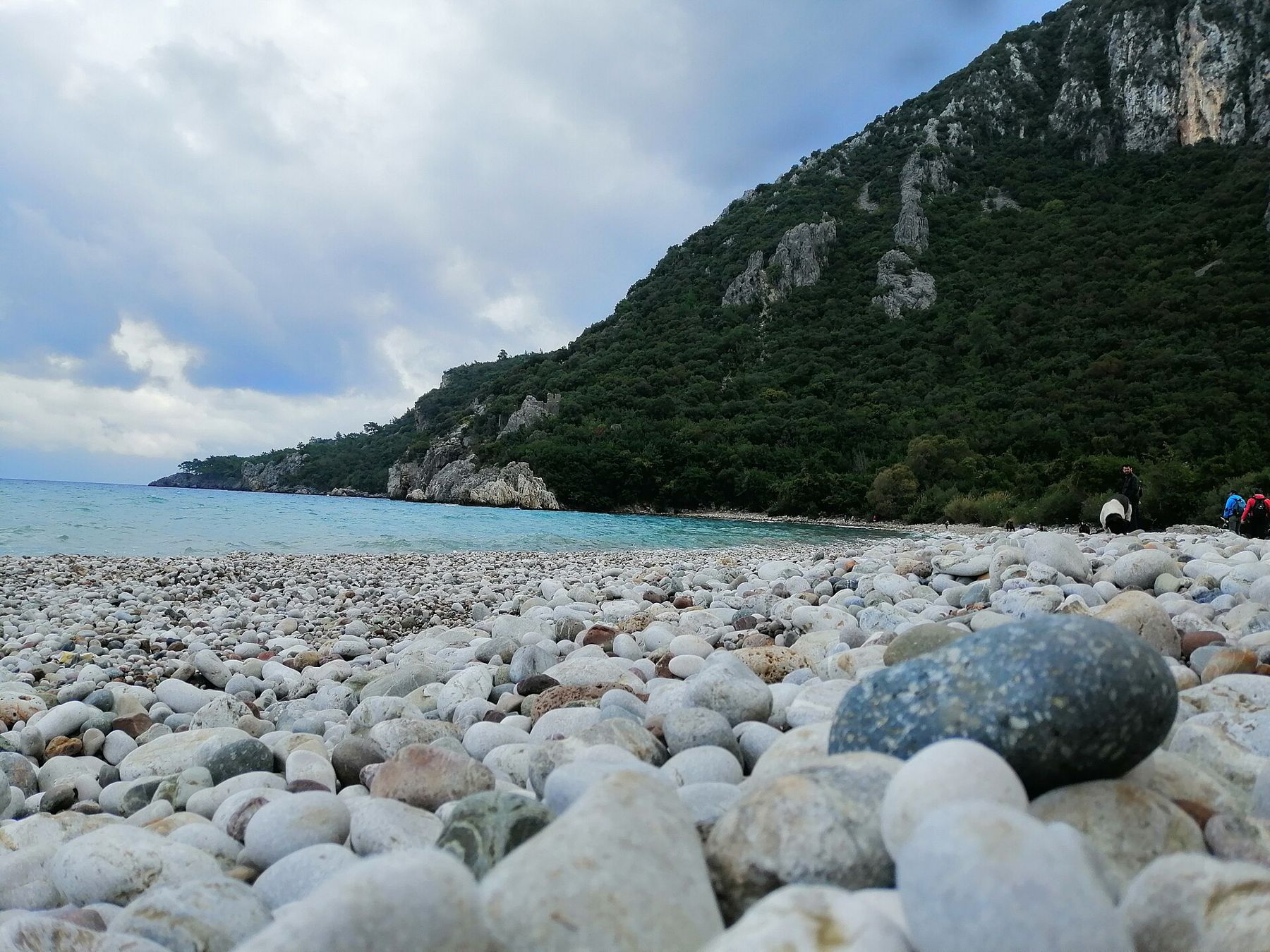
Olympos beach is the place where a valley runs out of land. A stream comes down between steep, wooded slopes, passes through reeds and pine, and slips across a bank of pale pebbles into the sea. On either side of the mouth, cliffs rise straight from the water, grey limestone streaked with green, and the beach itself curves away north toward the next village along the shore.
It is a simple beach. There is no promenade and no built seafront, only stones, water and the mountains behind. That simplicity is most of the appeal: you arrive on foot through the valley, the trees open, and the bay is suddenly in front of you, a band of turquoise against the dark cliffs.
Where the valley meets the sea
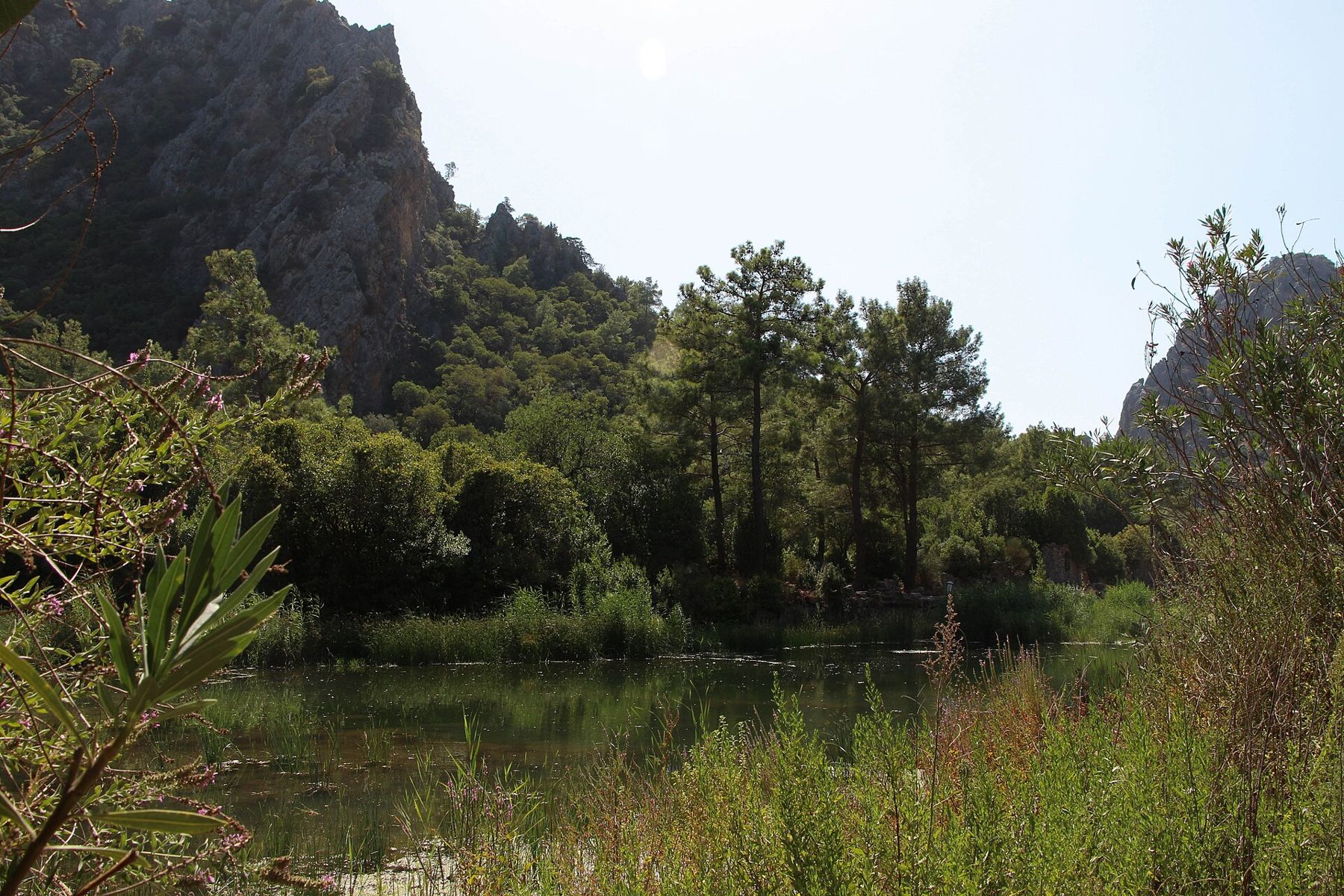
The valley of Olympos lies on the coast southwest of Antalya, inside a long stretch of protected coastline at the foot of the Beydağları range. The village sits a short way inland, spread along the valley floor among orchards and pine. The stream follows the valley down to the beach, and the ruins of ancient Olympos stand among the trees beside its lower course, one of the landmarks you pass on the way to the water.
The beach faces east across open sea. To the north it runs on as one long pebble shore toward the village of Çıralı, and on a calm day you can walk between the two along the waterline. To the south the cliffs close in, and the shore ends under the rock.
Getting down to the beach
Most people reach the shore by walking down the valley from Olympos village. The path follows the stream through shade, past reeds and old walls, and comes out on the pebbles near the river mouth. The route to the beach passes through the area of the archaeological site, and in general an entry ticket applies there. Arrangements, prices and opening hours change, so check before you go.
The other way in is from the north. If you are staying in Çıralı, you can walk south along the beach and reach the Olympos end without passing through the valley at all. The stream mouth sometimes needs wading, depending on the season and how much water is coming down.
Coming by road, Olympos and Çıralı are reached by turnings off the main coast road between Antalya and Kumluca. Minibuses run along the coast road, and local transport down to the village exists in season in general terms; check timetables locally.
Pebbles, cliffs and clear water
The shore is pebble from end to end, white and grey stones rounded by the sea, some the size of an egg, some as big as a fist. They are hard to walk on barefoot, especially at midday when the sun has been on them for hours. Water shoes make a real difference here, both on the beach and getting in and out.
The pebbles drop fairly quickly into the sea, so you are swimming within a few steps. Because the stones do not cloud the water the way sand does, the sea is usually very clear. Over the pale pebbles it looks almost green near the shore; further out, under the cliffs, it turns a deep blue. Snorkelling along the rock at the southern end is pleasant on calm days.
For more on footwear and the difference between pebble and sand shores, the guide to pebbles, sand and what to wear on your feet goes into detail.
The cold stream and the open sea
The stream changes the water near the mouth. It brings cold fresh water down from the mountains, and where it spreads into the sea you can feel a chilly layer on the surface, sometimes noticeably colder than the water a little way along the beach. In spring, when the stream is fuller, the difference is strongest. Swim a short distance north of the mouth if you want the warmer, saltier water.
The beach is open to the east and the southeast, and on some days a swell rolls in and breaks on the pebbles. On those days the backwash over the stones can be strong enough to knock you off your feet as you get out. Watch the water for a few minutes before you go in, and use any flags or markers on the beach. The guide to wind, waves and flags covers what the colours mean.
Turtles on the shore
Loggerhead turtles nest on this stretch of coast, and the beach from Olympos north toward Çıralı is part of their nesting ground. In the nesting season, roughly late spring through summer, females come ashore at night to lay eggs in the sand and pebbles, and the hatchlings head for the sea weeks later.
The rules that follow from this are simple and important. Stay off the beach at night when that is asked, use no torches or lights on the shore after dark, and keep away from any marked or caged nests. Do not dig into the beach near nests or push umbrella poles into it there. Signs on the shore give the local details, and they can change from season to season.
Sea temperature and season
The water here follows the general pattern of the Antalya coast, with the stream keeping the river mouth cooler. In April the sea is typically roughly 17–19°C, fresh enough that most visitors only take short swims. By June it has usually warmed to around 24–26°C, and in August it often sits at 27–29°C. September typically holds 25–27°C, and October still offers roughly 22–24°C, falling through the month.
Late spring and early autumn are good times to come. The valley is green, the walk down is cooler, and the beach is quieter. For the whole year in one place, see sea temperature month by month.
What to bring and what to check
- Water shoes for the pebbles and the stream crossing.
- Drinking water and something to eat, since facilities on the beach vary by season.
- A hat and a light layer; natural shade on the beach itself is limited.
- Cash or card for any site entry, depending on current arrangements.
Lifeguard cover, toilets and changing space vary; check locally. Leave the beach as you found it, and carry out everything you bring in. On a protected shore with nesting turtles, that is not only good manners but part of the rules.