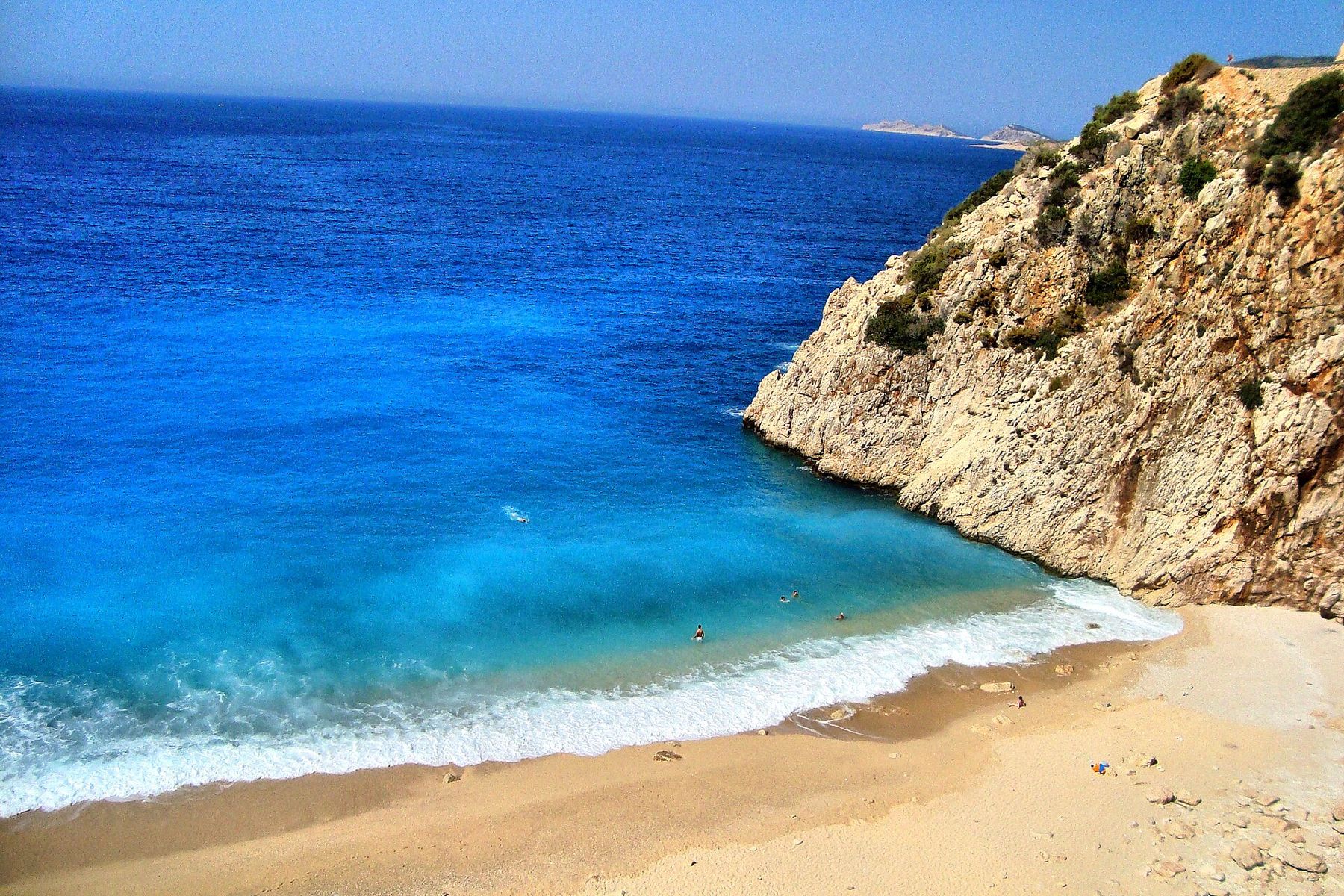
Kaputaş is one of the most photographed beaches on the Turkish Mediterranean, and it earns that from the road before you even reach it. The coast road between Kaş and Kalkan crosses a narrow gorge on a bridge, and from the bridge you look straight down at a short cove of pale sand, closed in by cliffs, with water so bright a blue that it barely looks real.
The beach is small and simple. There is the gorge behind it, the cliffs on either side, the sand and the sea. What makes it different from other coves is how you reach it: from the road, down a long flight of steps cut into the cliff, with the colour of the water getting stronger as you go down.
Where the cove sits
Kaputaş lies on the coast road west of Kaş, roughly between Kaş and the town of Kalkan, closer to Kalkan. A gorge cuts down through the mountains here and opens onto the sea, and the beach has formed at its mouth, a wedge of sand and fine pebbles between two walls of pale limestone.
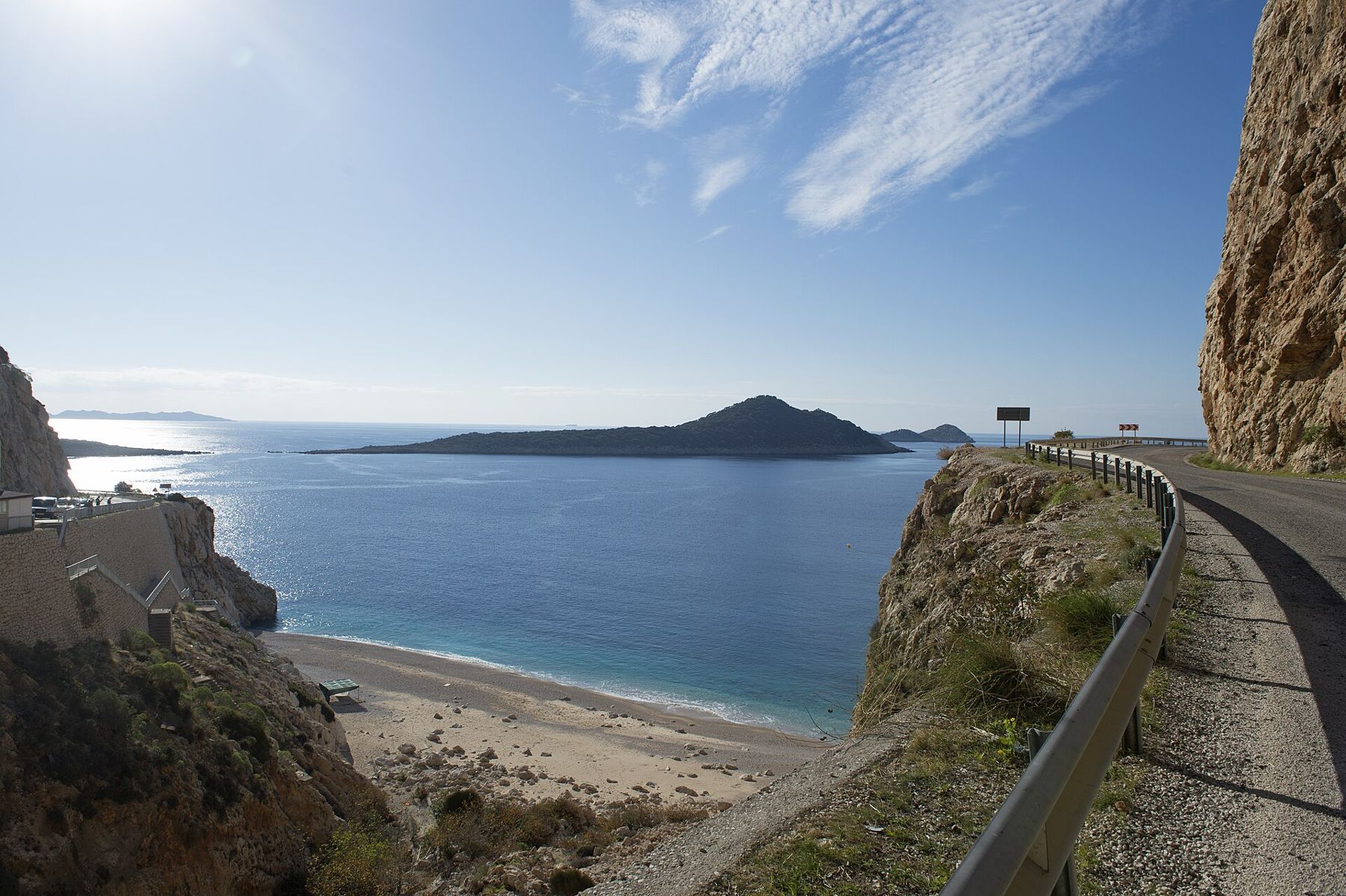
The road crosses the gorge on a bridge a little inland of the beach, then runs along the cliff above the cove. Offshore, a dark rocky island rises out of the sea, and on a clear day you can follow the coast out toward the headlands beyond. The whole scene faces south and southwest, open to the sun and to the sea.
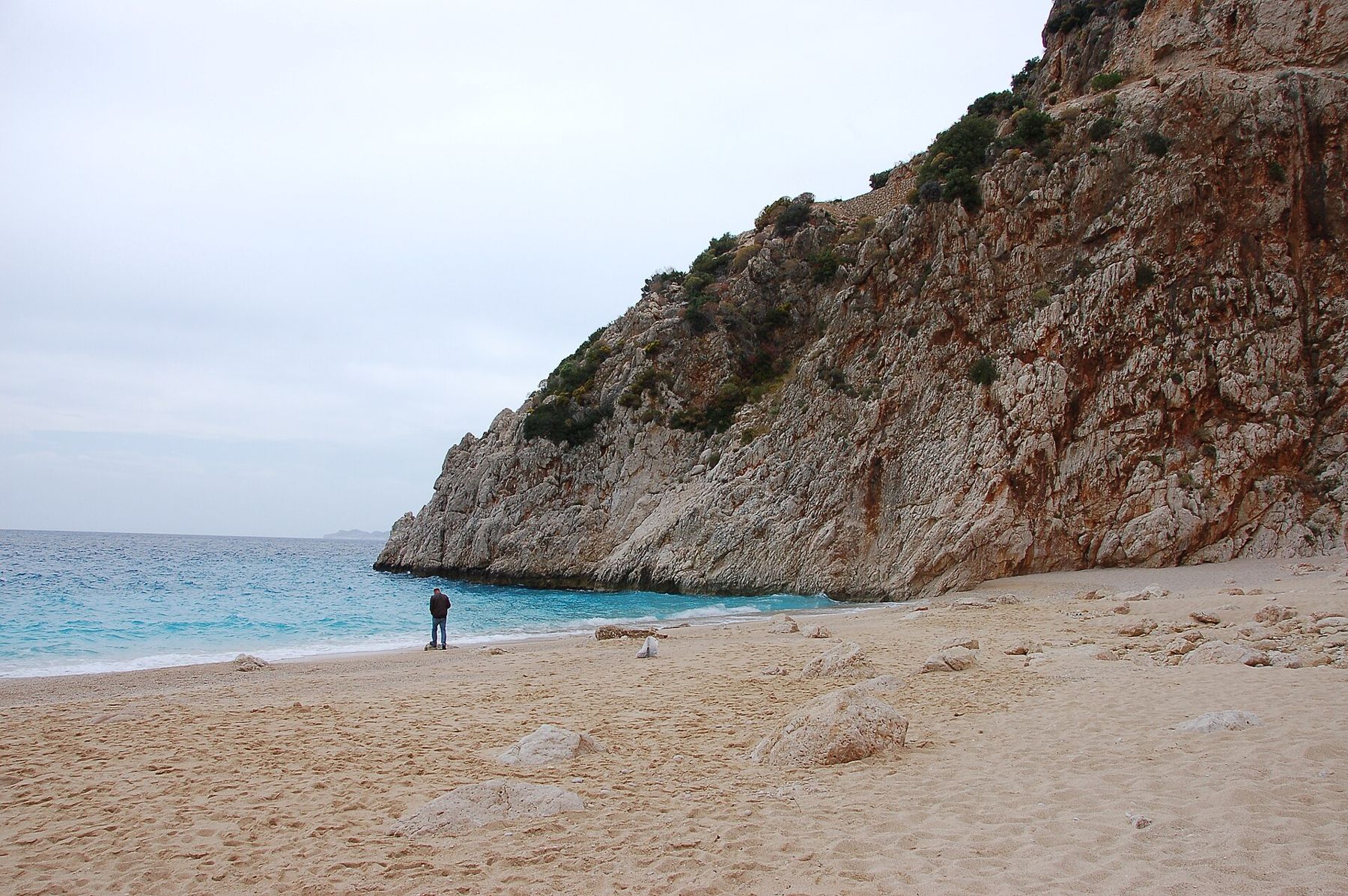
The gorge itself is dry for much of the year, a steep cleft of boulders and scrub cutting back into the mountains. After heavy winter rain, water can run down it to the sea. From the beach, looking inland, you see the cliffs narrowing toward the bridge and the road clinging to the rock above you.
The steps down
Access is by a long flight of steps from the road down to the sand. They are steep in places, exposed to the sun, and climbing back up on a hot afternoon takes more effort than most people expect. There is a railing, and the steps are in reasonable order, but they are not suitable for pushchairs or anyone who struggles with stairs.
Plan for the climb. Carry only what you need, bring water for the way back up, and if you are visiting in summer, think about arriving early or late rather than at midday. The view on the way down is a good excuse to stop and catch your breath on the way up.
Parking along the road is limited, and in high season the roadside spaces fill early. Minibuses running between Kaş and Kalkan can stop near the top of the steps in general terms; check current services and stops locally, and take care walking along the road, which has little room for pedestrians.
The colour of the water
The water at Kaputaş is the reason most people come. Over the pale sand near the shore it is a light, glassy turquoise, deepening to a strong blue a little way out, then to a dark ink colour where the bottom drops away. On a sunny day with the sea calm, the colours are sharp enough that photographs from the road look painted.
The colour comes from the pale sand and stone, the depth, and the clarity of the water on this rocky stretch of coast, where there are no large rivers carrying silt into the sea. Cold fresh water can seep into the sea from the rock along this coast, and swimmers sometimes notice cooler patches near the cliffs.
On a sunny day with the sea calm, the colours are sharp enough that photographs from the road look painted.
Waves, currents and swimming sense
That open position has a cost. Kaputaş faces the open sea, and when a swell is running, waves come straight into the cove and break hard on the steep shore. The beach drops away quickly, so the water is deep only a few steps out, and on rough days the backwash pulls strongly as each wave runs back down the sand.
On swell days, currents can form along the cliffs and out from the middle of the cove. Even strong swimmers should take this seriously. Watch the sea for a while before going in, look for any flags or warnings, and if the waves are large, stay in the shallows or simply enjoy the view. The guide to wind, waves and flags explains the usual flag colours and how afternoon wind changes the sea on this coast.
On calm days, by contrast, the cove is a fine place to swim. The water is clear enough to see the bottom well beyond your depth, and swimming out a little way lets you look back at the gorge and the cliffs from the sea.
Crowds, shade and the best times
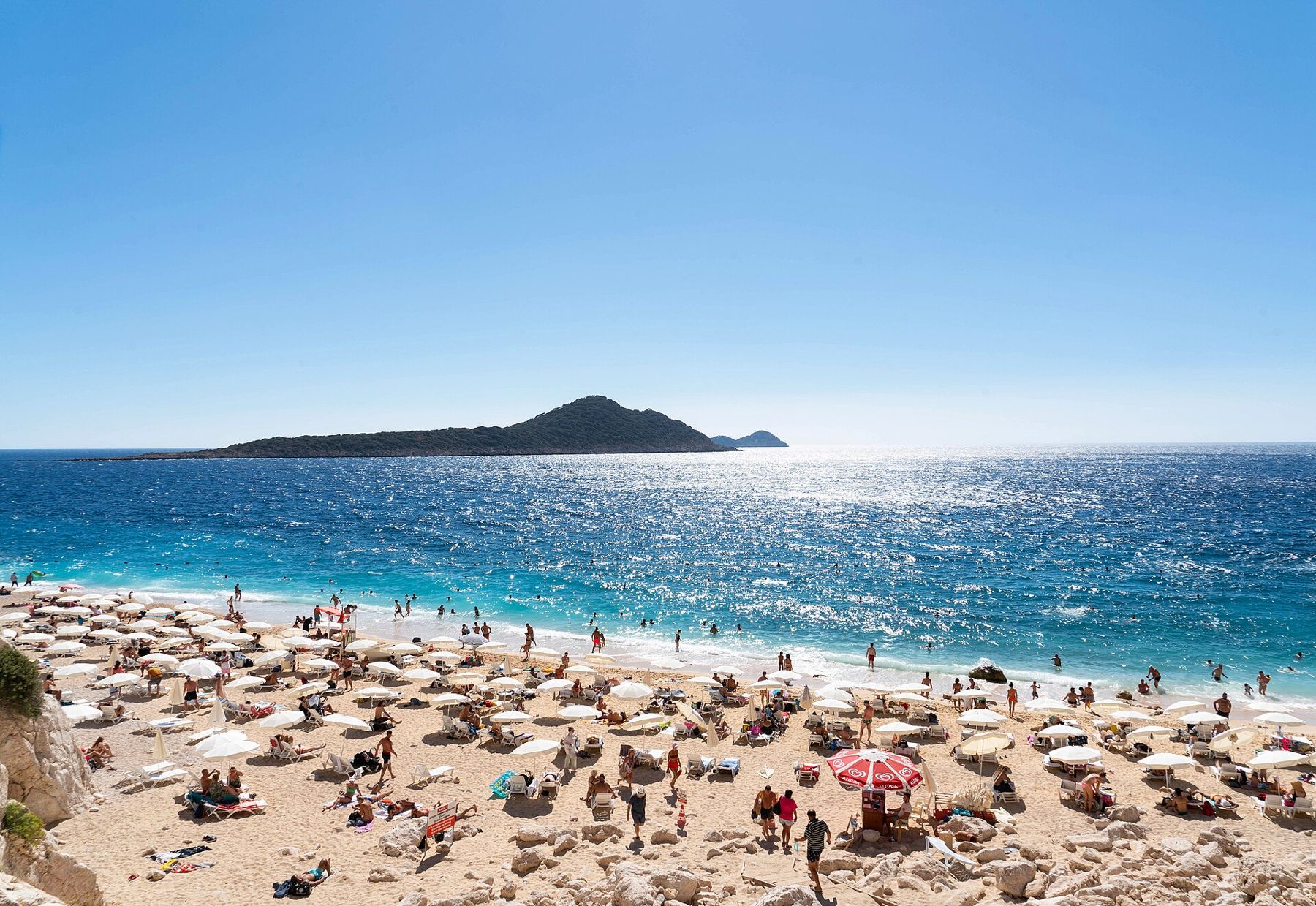
Because the beach is small and famous, it fills up in high summer, especially from late morning to mid-afternoon. Umbrellas and sunbeds take up much of the sand in season, and arrangements for renting them change from year to year; check locally. Natural shade comes only from the cliffs, early and late in the day.
Early morning is the best time. The sea is usually calmer, the steps are cooler, and you may have the water nearly to yourself. Late afternoon is the other good window, when the sun drops toward the sea and the crowds start the climb back to the road.
In the shoulder months the cove changes character. In May, late September and October the sand is quieter and the light softer. Facilities may be reduced or closed outside the main season, so bring what you need.
Sea temperature through the year
Kaputaş follows the general pattern of this coast. The sea is typically roughly 17–19°C in April and around 24–26°C in June. In August it often sits at 27–29°C, September typically holds 25–27°C, and October usually brings roughly 22–24°C, cooling through the month. Because the water deepens quickly and seeps of cold fresh water occur along the rock, it can feel cooler than a shallow sandy bay on the same day. For the year month by month, see sea temperature on the coast.
- Bring plenty of water; the climb back up is hot.
- Water shoes help on the pebbles at the edge of the sea.
- Keep an eye on children near the waterline on wavy days.
- Lifeguard cover and facilities vary; check before you go.
Kaputaş works best as a stop rather than a whole day. Come down early for a swim while the sea is calm, look back at the gorge from the water, and climb up before the midday heat. If the sea is rough, the view from the road is still worth the stop, and the more sheltered swims around Kaş are a short drive away.