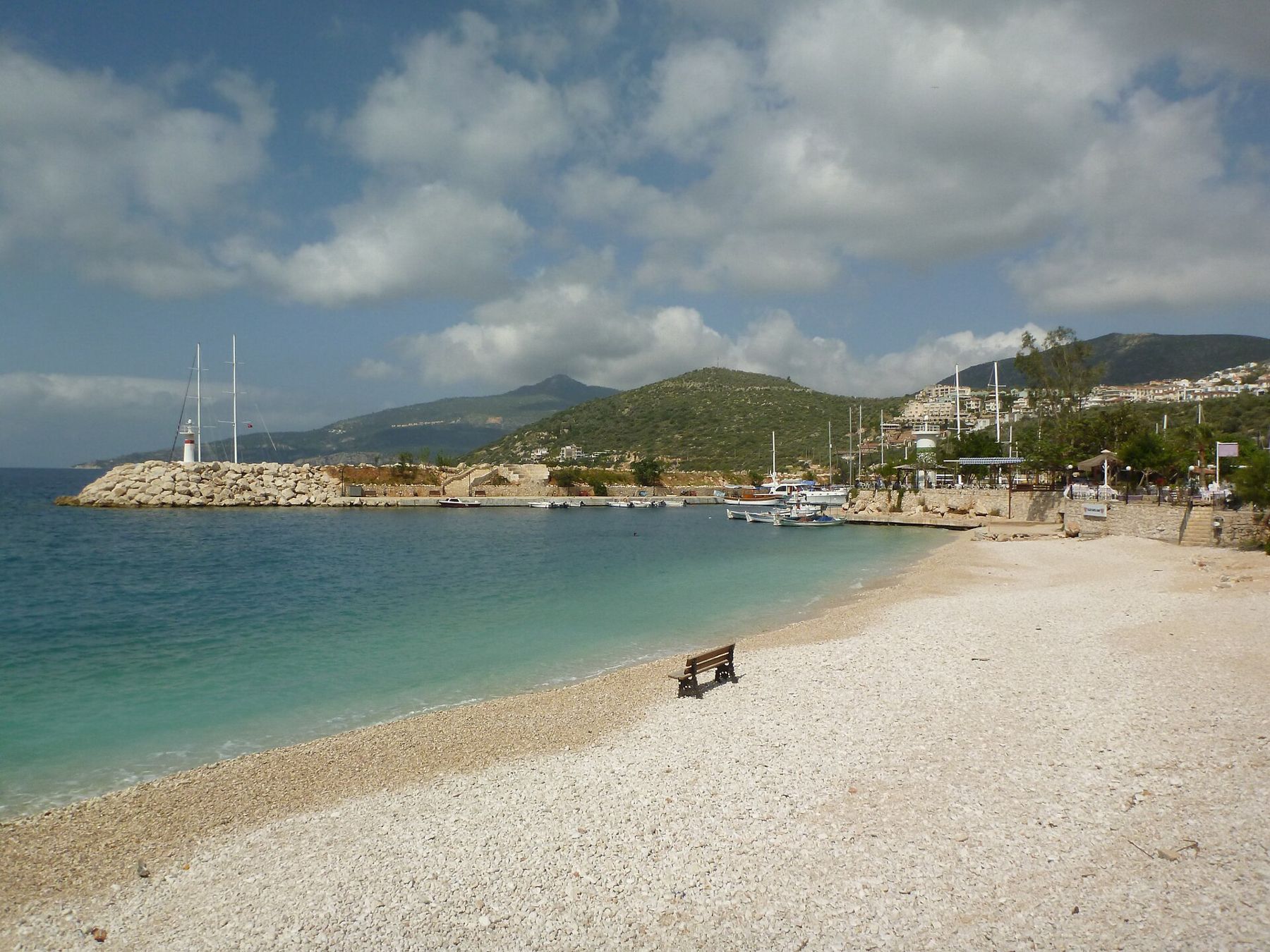
Kalkan sits on a steep slope at the head of a small bay, its white houses stacked one above another down to a harbour full of wooden boats. It is not a beach town in the way that Kemer or Konyaaltı are. There is no long strand here. Instead you get a short town beach of pale pebbles beside the harbour wall, swimming from rocks and platforms around the bay, and two of the best-known beaches on the coast within easy reach by road.
That mix suits a certain kind of beach day: an early swim in town, a longer outing to sand or a gorge cove, and evenings back on the harbour as the light leaves the mountain.
The town beach
The public beach lies beside the harbour, between the breakwater and the waterfront. It is small, a curve of white and grey pebbles with a few benches and a view straight out past the harbour light to the open sea. The water here is a striking pale turquoise over the stones, darkening to deep blue only a short way out.
Like most pebble shores on this coast, it shelves fairly quickly. You are swimming within a few steps, and the clarity is excellent on calm mornings. The size is the catch. On summer afternoons the beach fills, and there is little room to spread out. Arrive early in July and August, or treat it as a place for a quick swim rather than a whole day.
Being so close to the harbour, the beach sees boat traffic nearby. Stay within any marked swimming area and well away from the harbour mouth.
Platforms on the rocks
Much of Kalkan's swimming happens away from the town beach, on the rocky shores of the bay. Wooden and concrete platforms are built out over the water, with ladders down into the sea. Many of these are attached to private businesses, and access, opening times and charges for sunbeds vary; some offer a boat shuttle across the bay in season. Check locally, as arrangements change from year to year.
Platform swimming is a different experience from the beach. You drop straight into deep, very clear water, often several metres deep at the foot of the ladder. It suits confident swimmers and snorkellers. A mask shows rock, weed and small fish below, and the colour of the water off the rocks is as good as anywhere on the coast. Wear water shoes on the rock, use the ladders rather than climbing out over sharp limestone, and look out for sea urchins on submerged rocks.
A steep town
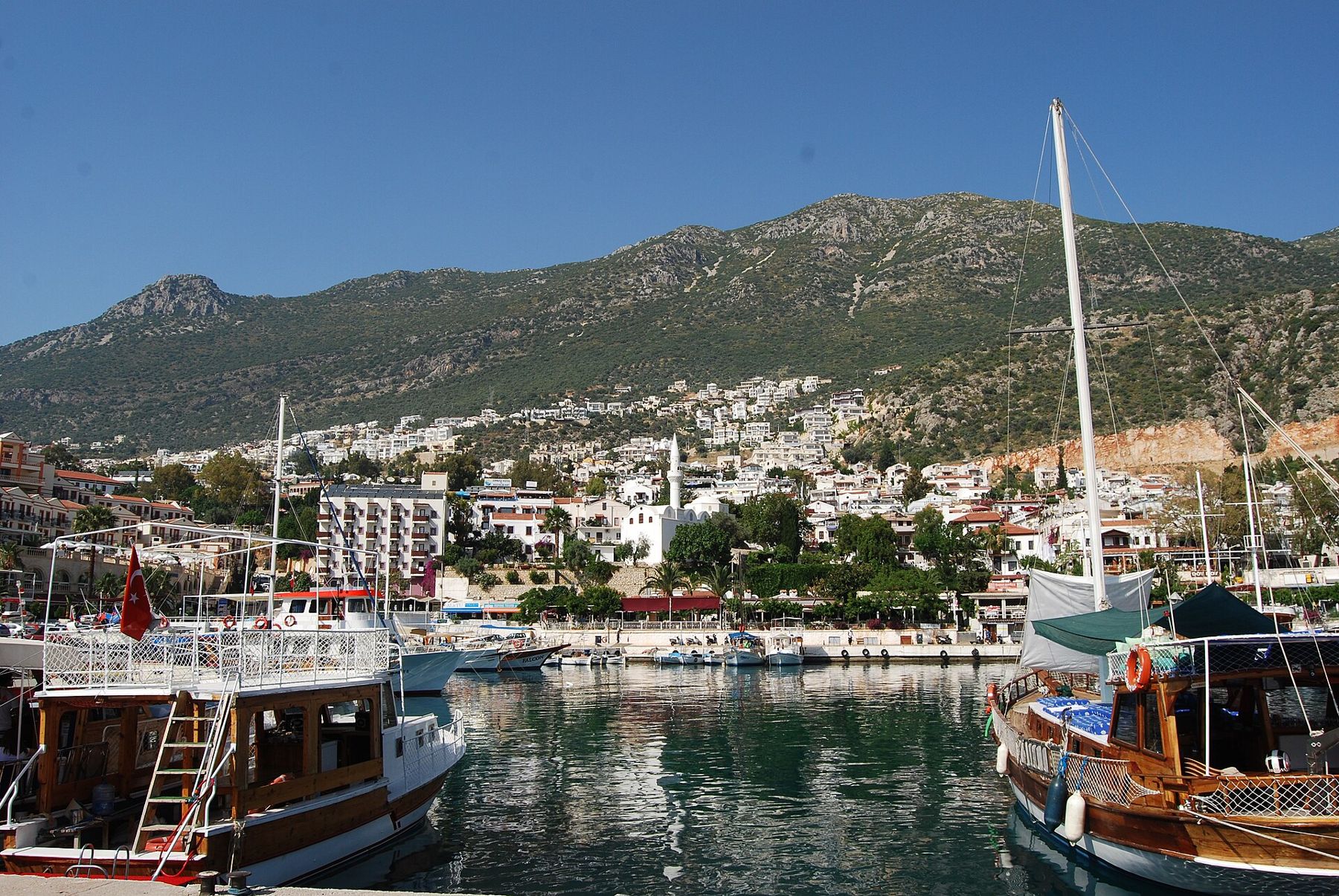
Kalkan is built on a hillside, and almost everything involves stairs or a steep lane. The old part of town, with its whitewashed houses, wooden balconies and bougainvillea, runs down to the harbour; newer villas climb much higher up the slope. Walking from the upper town down to the beach is easy. Walking back up in the afternoon heat is another matter, so plan your day with that in mind.
A small white mosque stands near the waterfront, a useful landmark when you are finding your way down through the lanes. The harbour promenade is the town's evening gathering place, and it is pleasant for a slow walk once the sun has dropped behind the mountain.
Water and season
The sea at Kalkan follows the wider coast pattern. In April it is typically around 17–19°C, and by June roughly 23–25°C. August often reaches 27–29°C, and September usually holds 26–28°C, making it one of the best months here. October typically brings 23–25°C, cooling as the month goes on.
Kalkan's bay has one local quirk worth knowing. This is limestone country, and fresh water from the mountains finds its way into the sea through springs below the surface. Swimming off the rocks, you may pass through patches that feel suddenly colder, and sometimes look slightly hazy where fresh water meets salt. It is harmless, and on a hot day it is welcome. For the year in one place, see the guide to sea temperature month by month.
Summer afternoons often bring a breeze into the bay. Mornings are usually the calmest time for swimming and snorkelling.
Moving on to Kaputaş
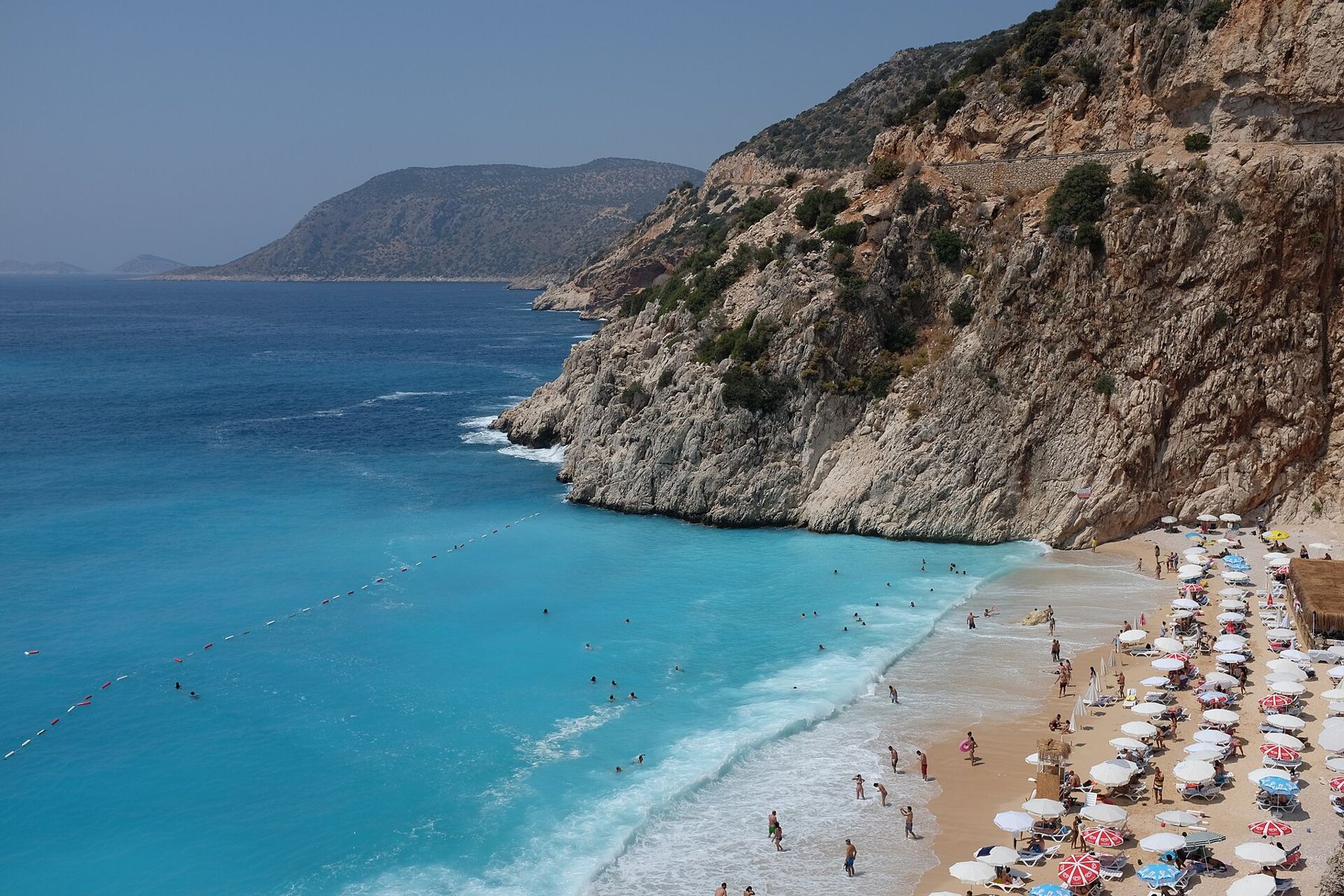
East of Kalkan, on the coast road toward Kaş, the road crosses the mouth of a narrow gorge, and below it lies a small beach of fine pebble and sand in water of an almost unreal blue. A long flight of steps leads down from the road. Kaputaş, the beach at the bottom of the steps, has its own guide on this site. It is a beautiful place, but not a quiet one in high season, and it is more exposed to waves and currents than Kalkan's bay. Go early, check the flags and take water for the climb back up.
West to Patara and beyond
In the other direction, a short drive west of Kalkan, Patara's long sand beach offers everything Kalkan cannot: kilometres of sand, dunes and open space. It is a protected area and a turtle nesting beach, with rules about access, umbrellas and night closing; check the current arrangements before you go. The ruins of ancient Patara stand behind the dunes on the way in. Patara is more exposed to wind and waves than Kalkan, so a calm morning there and a sheltered swim in Kalkan in the afternoon often fit together well.
Kaş, further east, has its own rocky swimming and small beaches; the guide to swimming off the rocks in Kaş covers it.
Getting there
Kalkan lies on the main coast road between Kaş and Fethiye. Regular minibuses run along this road and stop at Kalkan. From Antalya the journey is long, several hours by road. Within town, everything is reachable on foot, if you do not mind the hills. Parking near the harbour is limited in summer, so it often makes sense to walk down from wherever you are staying.